
Cold Storage Rent Calculation Made Simple: Per Bag, Monthly & Seasonal Rates

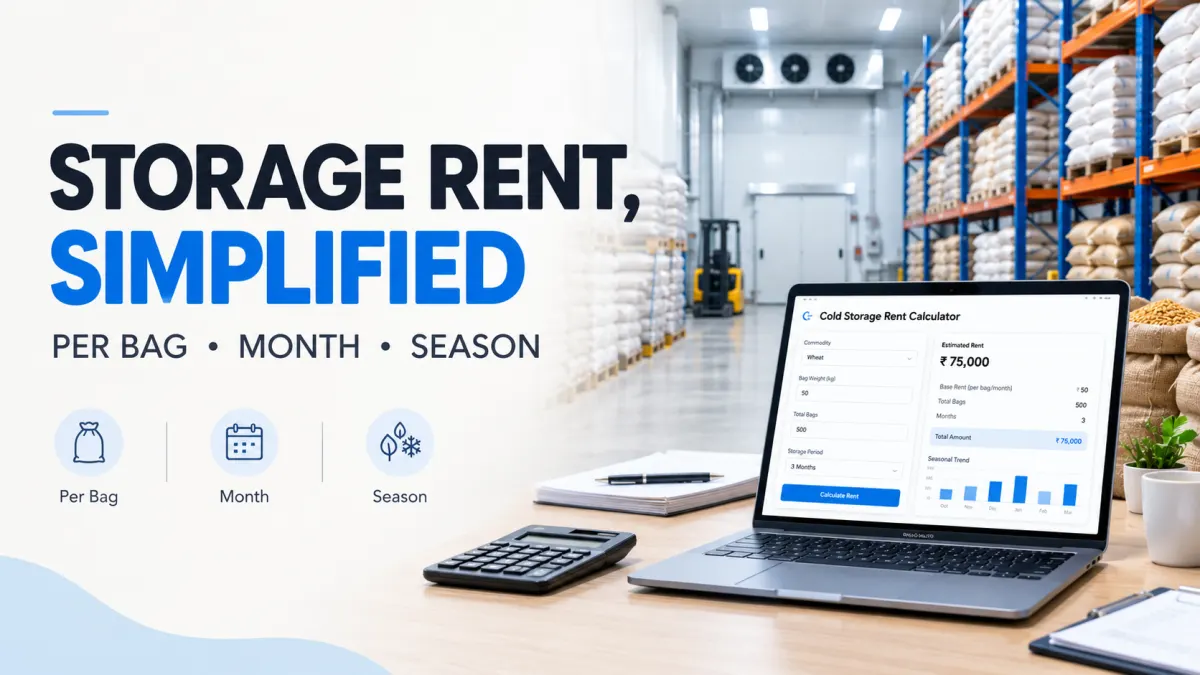
Calculating cold storage rent shouldn't be more complicated than managing the stock itself.
But anyone who runs a cold storage facility knows how quickly billing can become confusing.
A customer stores 250 bags. Another stores goods for three months. Someone collects half their stock early. Meanwhile, different customers have different storage rates.
Suddenly, what looked like a simple calculation becomes a spreadsheet full of numbers.
And then comes the familiar question:
"Why is my storage bill higher than expected?"
The good news? Cold storage rent calculation doesn't have to be difficult.
Whether you charge customers per bag, per month, or per season, understanding a few simple formulas can make billing faster, clearer, and more accurate.
In this guide, we'll break down the most common cold storage rental methods with easy examples and explain how cold storage management software can take the manual work out of billing.
Let's make the numbers simple.
First, What Determines Cold Storage Rent?
Before calculating storage rent, you need four basic pieces of information.
Quantity stored: How many bags, kilograms, pallets, or other units are being stored?
Storage rate: How much do you charge per unit?
Storage duration: How long will the goods remain in the facility?
Billing agreement: Are charges calculated daily, monthly, seasonally, or according to a special contract?
For example, charging ₹2 per bag per day is very different from charging ₹60 per bag for a fixed 30-day period.
The rate might look similar, but the billing rules can change the final amount.
The golden rule: Always be clear about the quantity, rate, and chargeable storage period before calculating rent.
The examples below use hypothetical rates for explanation. Actual prices and billing rules depend on the agreement between the facility and its customers.
1. How to Calculate Cold Storage Rent Per Bag Per Day
This is one of the simplest ways to calculate storage charges.
The customer pays according to the number of bags stored and how many chargeable days they remain in the facility.
The formula
Storage Rent = Number of Bags × Number of Days × Daily Rate Per Bag
Example: 250 bags stored for 18 days
Let's say a customer stores:
Number of bags: 250
Storage duration: 18 chargeable days
Agreed rate: ₹0.80 per bag per day
Here's the calculation:
250 × 18 × ₹0.80 = ₹3,600
<text highlight="green">Total storage rent: ₹3,600</text>
Simple, right?
But what happens when the customer collects some of the bags before the storage period ends?
That's where things become a little more interesting.
What if a customer collects only part of their stock?
Imagine the same customer stores 250 bags, but after 10 chargeable days, they collect 100 bags.
The remaining 150 bags stay in storage for another 8 chargeable days.
You now have two billing periods with different quantities.
| Storage period | Quantity | Calculation | Rent |
|---|---|---|---|
| First 10 days | 250 bags | 250 × 10 × ₹0.80 | ₹2,000 |
| Next 8 days | 150 bags | 150 × 8 × ₹0.80 | ₹960 |
| Total | ₹2,960 |
Final storage rent: ₹2,960
Without tracking the partial dispatch, someone might incorrectly charge for all 250 bags over the full 18 days.
That's why accurate inward and outward stock records are so important.
How software makes this easier: A cold storage management system can automatically track how much stock remains after each dispatch and calculate rent using the correct quantities and chargeable days.
No need to manually rebuild the calculation every time a customer collects goods.
2. How to Calculate Monthly Cold Storage Rent
Some cold storage facilities prefer to charge customers for a fixed billing period instead of calculating rent day by day.
This can make pricing more predictable.
However, it's important to distinguish between a calendar month and a fixed 30-day billing block.
The formula
Monthly Storage Rent = Number of Bags × Rate Per Bag Per Billing Period
Example: 200 bags for one 30-day period
Suppose a customer stores:
Number of bags: 200
Rate: ₹45 per bag per 30-day block
Storage duration: 30 days
The calculation is:
200 × ₹45 = ₹9,000
<text highlight="green">Total rent for the 30-day block: ₹9,000</text>
Easy enough.
But what if the goods stay for 45 days instead of 30?
What happens when storage exceeds one month?
This depends entirely on your billing agreement.
Let's look at two common approaches.
| Billing method | Calculation | Total |
|---|---|---|
| Pro-rata billing | 200 × ₹45 × 45/30 | ₹13,500 |
| Full 30-day blocks | 200 × ₹45 × 2 | ₹18,000 |
Notice the difference?
The same quantity and storage period can produce very different invoices.
Under pro-rata billing, the customer pays proportionally for 45 days.
Under full-block billing, any portion of a second block is charged as a complete block.
Neither is automatically the correct method. The agreed billing policy determines what should be charged.
How software makes this easier: You can configure the applicable billing rules so rent is calculated consistently instead of relying on staff to remember how each customer's agreement works.
This becomes especially useful when you manage hundreds of customers with different storage arrangements.
3. How to Calculate Seasonal Cold Storage Rent
Not every customer needs storage for a few days or weeks.
Some commodities are stored for an entire season under a pre-agreed rental arrangement.
Seasonal billing can make sense when the storage duration and rate are agreed in advance.
The formula
Seasonal Storage Rent = Number of Bags × Agreed Seasonal Rate Per Bag
Example: 300 bags stored for one season
Suppose a customer has the following agreement:
Number of bags: 300
Seasonal rate: ₹120 per bag
Storage period: One agreed season
The calculation is:
300 × ₹120 = ₹36,000
<text highlight="green">Total seasonal storage rent: ₹36,000</text>
Straightforward.
But seasonal billing becomes more complicated when customers deposit or withdraw goods at different times.
For example:
What if a customer brings additional bags halfway through the season?
What happens if they collect goods before the season ends?
Will additional charges apply if the goods remain after the season?
Is there a minimum seasonal charge?
These questions should be answered in the storage agreement.
How software makes this easier: A suitable cold storage billing system can store seasonal rates and apply the configured rules for eligible quantities, early releases, or extended storage periods.
Instead of maintaining separate calculations for each customer, your billing team can work from organized transaction records.
Quick Comparison: Daily, Monthly, and Seasonal Rent
Not sure how the three methods compare?
Here's a simple overview.
| Billing method | How it works | Best suited for |
|---|---|---|
| Daily rent | Charges based on quantity and chargeable days | Flexible storage durations and frequent stock movements |
| Monthly rent | Charges by calendar month or an agreed fixed period | Regular storage arrangements |
| Seasonal rent | Uses a rate for a defined storage season | Long-term or seasonal commodity storage |
There isn't one perfect billing method for every facility.
The right approach depends on your commodities, customers, and commercial agreements.
The most important thing is to apply the chosen method consistently.
4. The Hidden Details That Can Change Your Storage Rent
Here's something many operators discover the hard way:
Getting the multiplication right doesn't always mean getting the invoice right.
Several small details can affect the final storage charge.
Arrival and dispatch dates
Does billing start on the day goods arrive or the following day?
Is the dispatch day chargeable?
These details should be clearly defined to avoid confusion.
Minimum storage periods
Some agreements require customers to pay for a minimum number of days even when goods are collected earlier.
Your billing process must account for this rule when applicable.
Partial stock withdrawals
When customers collect only part of their goods, the remaining quantity may continue accumulating rent.
Your records should accurately reflect these changes.
Different rates for different customers
Not every customer necessarily pays the same rate.
Long-term agreements, commodity types, or negotiated pricing may result in different charges.
Discounts, additional charges, and taxes
A final invoice may include agreed discounts, handling charges, or applicable taxes.
These should be displayed clearly instead of being hidden within one unexplained total.
The simpler and more transparent your billing breakdown, the easier it becomes for customers to understand and trust it.
5. Why Manual Cold Storage Rent Calculation Becomes Difficult
Let's imagine a facility managing just 100 customers.
Some customers pay daily. Others have monthly agreements. A few use seasonal pricing.
Throughout the week, customers deposit goods, collect partial quantities, and make payments.
Now imagine maintaining all that information using paper records and spreadsheets.
Your accounting team needs to continuously check:
When each lot arrived
How much stock was originally deposited
How much has already been dispatched
Which rental rate applies
How many days should be charged
Whether any amount has already been paid
One incorrect quantity or date can affect the entire calculation.
And when the customer questions the invoice, someone has to trace the figures manually.
This is exactly where automated cold storage rent calculation becomes valuable.
6. How Cold Storage Management Software Simplifies Rent Calculation
Imagine generating a customer's storage bill without manually counting days, checking registers, or calculating the remaining quantity.
A well-designed cold storage management system connects inventory records with billing information.
Here's how that works in everyday operations.
Step 1: Record the inward stock
Your operator enters the customer, commodity, quantity, and arrival date.
Step 2: Apply the storage rate
The system uses the agreed daily, monthly, or seasonal pricing arrangement.
Step 3: Track stock movements
Whenever goods are dispatched, the system records the quantity released and updates the remaining stock.
Step 4: Calculate storage charges
The software calculates rent using the applicable quantities, periods, and billing rules.
Step 5: Generate the invoice
The billing team reviews the calculation and generates an invoice with the relevant details.
Step 6: Record payments
Once the customer pays, the payment is recorded and the outstanding balance is updated.
That's the real convenience.
Your stock records and billing calculations stay connected, reducing repetitive work and making each invoice easier to explain.
Of course, the software must support your actual billing agreement. Automatic calculations are only reliable when the rates, dates, quantities, and rules are configured correctly.
7. Five Simple Ways to Avoid Cold Storage Billing Mistakes
Even with good software, a few basic habits can make a big difference.
1. Agree on the rate before accepting stock.
Make sure the customer understands the chargeable unit, billing period, and applicable conditions.
2. Record every inward and outward movement.
Accurate inventory is the foundation of accurate billing.
3. Be clear about partial dispatches.
Decide whether released goods stop accumulating rent immediately or follow a minimum-period agreement.
4. Keep a transparent billing breakdown.
Every invoice should explain the charged quantity, storage period, rate, and adjustments.
5. Maintain accurate customer payment records.
Know what's been billed, what's been received, and what's still outstanding.
These simple practices can reduce billing confusion and help build stronger customer relationships.
Frequently Asked Questions
How is cold storage rent calculated per bag?
For daily billing, multiply the number of chargeable bags by the chargeable storage days and the agreed daily rate per bag.
For example, 100 bags stored for 10 chargeable days at ₹1 per bag per day would cost ₹1,000.
How do you calculate cold storage rent for one month?
Multiply the number of bags by the agreed rate for the monthly billing period. If the storage duration is shorter or longer, apply the contract's rules for partial or additional periods.
What is seasonal cold storage rent?
Seasonal rent is a storage charge agreed for a defined season. It may be calculated per bag or using another agreed pricing arrangement. Early withdrawals, additional deposits, and extensions depend on the contract.
How do you calculate rent when goods are partially dispatched?
For daily quantity-based billing, divide the storage duration into periods based on the quantity present during each period. Calculate each period separately and add the charges together, subject to the agreed contract terms.
Can cold storage management software calculate rent automatically?
Yes. Software with configurable rental billing can calculate storage charges using recorded stock quantities, storage durations, and agreed rates. Supported calculation methods and special billing rules vary between systems.
What is the easiest way to avoid cold storage billing errors?
Maintain accurate inward and outward records, clearly define billing terms, and use a consistent calculation method. Software that connects stock movements with billing can reduce repetitive manual calculations.
Final Thoughts: Make Every Storage Bill Simple and Clear
Cold storage rent calculation doesn't need to be a daily headache.
Whether you charge per bag, per month, or per season, the principle remains the same:
Know the quantity. Know the rate. Know the storage period. Apply the agreed rules.
When these details are recorded accurately, calculating rent becomes much easier.
And when inventory tracking, stock movements, billing, and payments work together in one system, your team can spend less time checking spreadsheets and more time managing the business.
Because good cold storage management isn't just about storing goods safely. It's also about making every transaction simple, accurate, and transparent.
Projects to explore next
Source-code projects from the KritiMyantra catalogue. Check each project's details before buying.

Laravel 12 + ReactJS Starter Kit: Add Multi-Language Support (Arabic, English, Spanish) with Blog CRUD
🚀 Installation & Setup Download & Extract Get the ZIP from kritimyantra.com and extract it. Includes preconfigu...

Flask Authentication System with Admin Panel - Kritim Yantra
Flask Auth Pro with Admin PanelA complete Flask authentication and user management system built for developers who want...
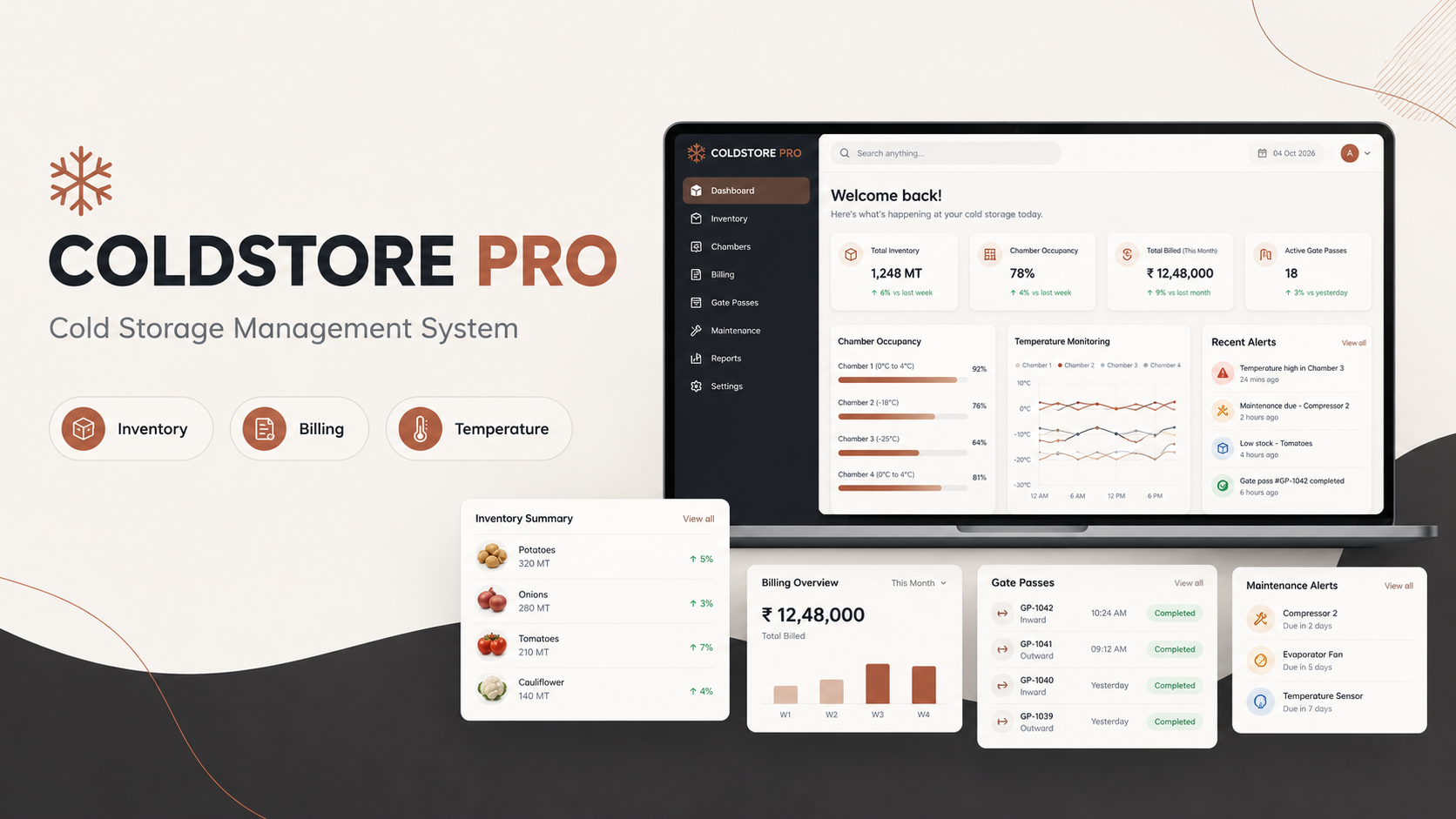
ColdStore Pro – Laravel Cold Storage Management System with Billing & Inventory
ColdStore Pro – Complete Cold Storage Management System ColdStore Pro is a complete Laravel-based management system buil...

Laravel Authentication Bypass Vulnerability: Affected Versions, API Security Risks, and How to Fix It
Updated: October 25, 2026 | Security Advisory: CVE-2026-114509An API endpoint protected by authentication middleware should reject...
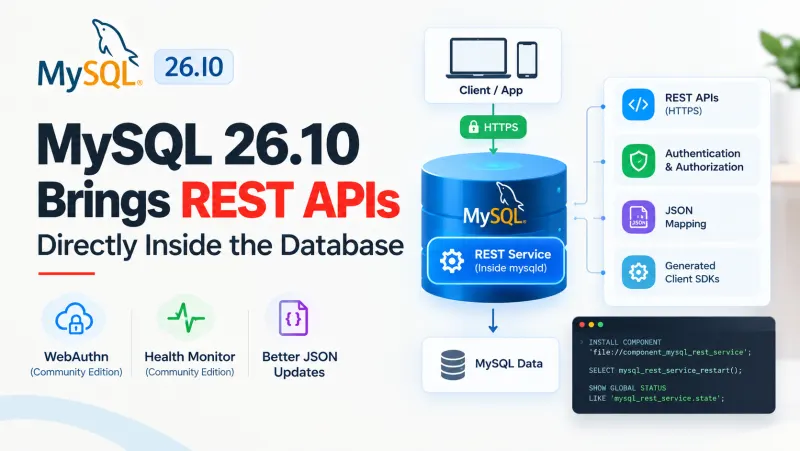
MySQL 26.10: What's New in REST APIs, Authentication, and Database Performance?
Building a REST API around MySQL usually involves more than writing SQL queries. You need an application server, database connecti...

Vue.js 3.6 RC13: Features, Risks & Upgrade Advice
A new Vue release is tempting, especially when it promises a faster reactivity system and a way to render components without a vir...

PostgreSQL 19: New Features, Performance & Upgrade Guide
Database upgrades are easy to justify when they promise faster queries. They're harder to justify when a production system is alre...

Cold Storage Management Software: 12 Smart Features That Make Your Business Easier in 2027
Running a cold storage business is complicated enough. Managing it shouldn't be.Imagine starting your day without searching throug...
Comments
No comments yet. Be the first to comment.
Sign in to join the discussion.