
AI Can Build a Laravel App in Minutes. But Can It Maintain One for Five Years?

AI is making software development faster. But the real test of a Laravel application isn't how quickly it can be generated. It's whether developers can understand, secure, upgrade, and maintain it years later.
Imagine this.
You ask an AI coding assistant to build a Laravel application. Within minutes, it generates models, controllers, migrations, API endpoints, authentication, and a working dashboard.
The interface looks good. The application runs. The initial tests pass.
You deploy it.
Five years later, that same application is handling thousands of customers, integrating with several external services, processing financial transactions, and supporting business operations that cannot afford unexpected downtime.
The original developer has moved on. Dependencies have changed. Business requirements have evolved. Nobody fully understands why certain architectural decisions were made.
A critical update is now required.
Can AI still help?
Absolutely.
But can it safely maintain everything it helped create?
That is a much more interesting question than how quickly AI can write code.
After approximately eight years of working with Laravel, I believe the next major challenge in software engineering is not simply generating more code.
It is making sure that the software we generate remains understandable, maintainable, secure, and economically sustainable.
And I think the rise of AI coding agents makes that challenge more important than ever.
We're Measuring AI Productivity at the Wrong Moment
AI coding tools have become part of mainstream software development.
According to the 2026 Stack Overflow Developer Survey, approximately 66% of respondents use AI coding assistants or agents, while 48% say they trust AI outputs when they can easily verify them.
Only 6.6% indicate they trust AI for many tasks, including important work decisions.
That distinction matters.
Developers increasingly trust AI to help them write code, but they are much more cautious about allowing it to make consequential decisions.
The same tension appears in software delivery research.
Google's 2025 DORA Report found that AI adoption was positively associated with software delivery throughput and product performance, but negatively associated with delivery stability.
In other words, greater development speed does not automatically produce more reliable software.
An interesting counterpoint came from METR's 2025 randomized study. In its particular setting—experienced open-source developers working in familiar repositories—access to early-2025 AI tools increased task completion time by 19%.
That study does not prove AI makes developers slower in general. Its tools, participants, and projects were specific to early 2025.
But it highlights something important.
Generating code faster and completing engineering work faster are not necessarily the same thing.
And neither metric tells us whether the resulting application will be maintainable in 2031.
The Five-Year Problem Nobody Demonstrates
Most AI development demonstrations follow a familiar pattern.
A developer describes a feature. An AI assistant generates the implementation. The developer runs the application and shows that it works.
It is impressive.
But a production application lives far beyond that demonstration.
Consider a hypothetical Laravel-based ecommerce platform.
Year 1: Everything looks simple
The application includes products, orders, payments, customer accounts, and an administrative dashboard.
AI helps generate repetitive code, build interfaces, write tests, and accelerate the initial implementation.
Delivery is fast.
Year 2: The business starts changing
The client introduces subscriptions, discount rules, international payments, and several new API integrations.
Some original assumptions no longer apply.
A controller that originally handled one payment scenario now supports five.
Year 3: Maintenance becomes complicated
A Composer dependency is no longer maintained. A payment provider changes its API. An older PHP runtime needs upgrading.
Developers discover duplicated business logic and tests that cover successful transactions but not critical failure scenarios.
Year 4: The architecture becomes difficult to understand
New developers join the project.
They can understand individual methods, but nobody can confidently explain the complete order-processing workflow.
AI coding assistants continue generating features, sometimes following different patterns from those already established in the application.
Year 5: A simple change becomes risky
The client asks for a new refund policy.
The change appears small, but it touches authorization, database transactions, payment integration, notifications, reporting, and audit records.
What should have been a manageable enhancement now requires extensive investigation.
This is a hypothetical scenario, but the engineering risks are real.
And there is an important lesson:
The cost of software isn't determined only by how quickly you build the first version. It's also determined by how safely you can change every version that follows.
1. AI Can Generate Code. Architecture Still Needs Judgment.
Laravel's developer experience makes it particularly attractive for AI-assisted coding.
Its conventions are expressive and consistent. Controllers, Eloquent models, validation, migrations, services, events, and queues provide recognizable patterns.
AI can generate code that follows those conventions.
But following a framework convention is not the same as understanding a project's architecture.
Imagine requesting:
"Build an order processing system with payment integration."
An AI assistant might generate a controller that validates the request, creates an order, calls a payment provider, sends an email, and updates inventory.
For a basic demonstration, this may work.
But a production system raises more questions.
What happens when the payment provider times out? What if the customer submits the request twice? What happens if inventory changes during checkout? Can a failed transaction be retried safely? How does the system recover from partial completion?
These are architectural questions, not syntax questions.
A more maintainable design might separate responsibilities into:
Controllers for HTTP request handling.
Application services or actions for business operations.
Policies for authorization.
Database transactions for consistency.
Jobs and events for asynchronous processing.
Integration classes for external services.
This doesn't mean every Laravel project needs a complicated enterprise architecture.
In fact, unnecessary abstractions can create maintenance problems of their own.
The goal is to establish clear boundaries around important business behavior.
Laravel Boost already helps coding agents understand framework guidelines and project-specific conventions. Laravel 13 also introduced first-party AI capabilities that make AI integration more natural.
These are meaningful improvements.
But even a sophisticated coding assistant still needs reliable project context.
The real goal should be code that belongs to the existing application, not just code that works independently.
2. Working AI Agents Need Business Rules They Cannot Bypass
One of the biggest changes in modern software development is the movement from AI assistants that suggest actions to AI agents that perform them.
Laravel 13, released on March 17, 2026, introduced the first-party Laravel AI SDK. It supports agents, tool calling, structured output, embeddings, and other AI capabilities.
The SDK also supports human approval for sensitive tool operations.
These features open interesting possibilities for business automation.
Imagine a Laravel application where an AI agent reviews customer refund requests.
The agent can read an order, analyze a complaint, and recommend whether a refund is appropriate.
But the recommendation should not automatically become a payment instruction.
The application must still enforce authorization, customer eligibility, refund limits, and business approvals.
For example, an application-level refund approval operation might contain logic similar to this:
use App\Models\Refund;
use Illuminate\Support\Facades\DB;
use Illuminate\Support\Facades\Gate;

Gate::authorize('approve', $refund);

DB::transaction(function () use ($refund) {
    $locked = Refund::query()
        ->lockForUpdate()
        ->findOrFail($refund->id);

    if ($locked->status !== 'pending') {
        return;
    }

    $locked->update([
        'status' => 'approved',
    ]);
});
Illustrative Laravel 13-compatible application code. It assumes an existing Refund model, an approval policy, and the relevant database fields.
Notice what this does not do.
It doesn't allow an AI-generated recommendation to bypass authorization. It doesn't automatically initiate an external payment. It doesn't assume that a second approval request should repeat the operation.
An actual refund system would also require validated business eligibility, audit logging, and idempotent processing with the payment provider.
The important principle is that AI should propose or initiate permitted workflows while application code enforces their boundaries.
This matters even more because agentic systems can encounter prompt injection and excessive-permission risks, as described in the OWASP Top 10 for LLM Applications.
Five years from now, the question won't simply be whether your AI agent can perform an action.
It will be whether you can prove that the action was authorized, correct, and recoverable.
3. A Successful Request Is Easy. A Failed Request Reveals the Architecture.
Laravel provides mature tools for queues, retries, events, transactions, and background processing.
But using those tools doesn't automatically guarantee reliability.
Consider an AI-assisted workflow that processes a customer's insurance claim.
The application receives documents, extracts information, validates a policy, requests approval, updates records, and sends notifications.
Now imagine the queue worker crashes after updating the claim but before recording the final result.
When the job retries, will it repeat an external action?
Will it create duplicate records?
Will it send the same notification twice?
This is where idempotency matters.
An operation should be designed so that repeating it doesn't unintentionally create additional business consequences.
Laravel supports useful building blocks, including database transactions, unique jobs, job middleware, and dispatching jobs after transactions commit.
But developers must still decide which operations can safely run again and which require explicit safeguards.
For payment and order workflows, that may mean using provider-supported idempotency keys, enforcing database uniqueness constraints, and recording the state of external operations.
For AI workflows, it also means considering what happens when a model produces an incomplete response or a human approval interrupts execution.
Reliable software isn't software that never fails. It's software designed to fail without causing unnecessary damage.
4. The Dependency Problem Gets More Expensive Every Year
Laravel applications rarely exist in isolation.
A mature application may depend on Composer packages, JavaScript libraries, cloud services, payment APIs, database drivers, authentication packages, and AI providers.
Each dependency brings useful functionality.
It also introduces a future maintenance obligation.
Laravel's annual major-release cycle is well documented. Laravel 13 requires PHP 8.3 or newer, and its official upgrade guide describes breaking changes and recommended dependency updates.
Even when the framework upgrade itself is relatively straightforward, an application's surrounding packages may complicate the process.
AI can help identify migration requirements and propose changes, but developers should understand the implications.
Basic maintenance begins with straightforward checks:
composer audit
composer outdated
composer check-platform-reqs
php artisan test
These commands help identify dependency risks, outdated packages, platform mismatches, and failing tests. They do not, by themselves, prove that an upgrade is safe.
The next step is reviewing the official upgrade guide, testing integrations, checking database compatibility, and validating deployment behavior.
An AI assistant can accelerate this work by explaining dependency conflicts, identifying deprecated APIs, and helping prepare a migration pull request.
But automatically upgrading packages without reviewing business-critical behavior is not responsible maintenance.
For agencies managing multiple Laravel applications, this is especially important.
A dependency that saves development time today may increase maintenance costs across several client projects later.
Choosing a package should involve more than checking whether it solves the immediate requirement.
It should involve asking whether the package is actively maintained, whether its functionality is essential, and how difficult replacing it might become.
5. AI-Generated Tests Can Pass While the Business Still Fails
AI is particularly useful for generating unit tests, feature tests, and repetitive test cases.
But there's a subtle problem.
An AI assistant can generate tests based on the same assumptions it used to generate the implementation.
If those assumptions are wrong, the tests may simply confirm the wrong behavior.
Imagine a refund workflow.
The generated tests might verify that a successful refund request updates the database and returns a successful response.
But what about an unauthorized user? A refund exceeding the permitted amount? A duplicate payment-provider response? A database failure after an external operation?
These are often the scenarios that matter most in production.
For example, a Laravel feature test could verify that an ordinary user cannot approve a refund:
public function test_regular_user_cannot_approve_refund(): void
{
    $user = User::factory()->create();
    $refund = Refund::factory()->create();

    $this->actingAs($user)
        ->post("/refunds/{$refund->id}/approve")
        ->assertForbidden();
}
Illustrative PHPUnit feature test. It assumes application-specific factories, model imports, route, and authorization rules.
The specific test isn't complicated.
The value comes from recognizing that the unauthorized scenario must be tested at all.
For conventional applications, good test coverage should reflect business invariants and failure scenarios, not simply lines of code.
For AI-powered applications, the testing challenge becomes broader because model responses can vary.
Developers may also need evaluation datasets, adversarial test cases, regression comparisons, and checks for unauthorized tool usage or unsupported answers.
Laravel's AI SDK supports fake agents and assertions, which are useful for deterministic application tests.
But faking an agent response doesn't measure the quality of a real model's output.
Both types of testing have a role.
AI should help us write more tests. Engineering judgment must decide what those tests need to protect.
6. Maintenance Needs Observability, Not Just Error Logs
A Laravel application can appear healthy while gradually becoming more expensive or unreliable.
HTTP requests may succeed while background jobs repeatedly retry.
An AI workflow may return correct answers while consuming far more tokens than expected.
A payment integration may experience increasing latency without immediately causing failures.
Laravel provides tools such as Horizon, Pulse, Telescope, and Nightwatch for different monitoring needs. Its AI SDK also offers usage information and events.
These capabilities help, but useful observability depends on what teams choose to measure.
For a business-critical workflow, I would want to understand:
Which request or event initiated it?
Which external services participated?
Which authorization decisions were made?
How many retries occurred?
Did the workflow complete successfully?
What did it cost to execute?
For AI-assisted operations, I would also want model and prompt-version visibility, appropriate audit records, and usage costs connected to individual features or customers.
Sensitive information should be redacted or access-controlled, rather than casually stored in logs.
When an incident occurs, developers need enough context to explain what happened without exposing private customer data.
That ability becomes especially valuable when the original implementation team is no longer available.
7. The Most Valuable Documentation Explains Why
AI coding assistants are increasingly capable of examining repositories and describing unfamiliar code.
That can make developer onboarding easier.
But a repository cannot always explain why an architectural decision was made.
A developer might discover that an application deliberately avoids a particular library.
Was it because of licensing concerns? Performance problems? Security requirements? Client infrastructure limitations?
Without that context, a coding agent might confidently introduce the same dependency again.
This is why I believe architecture decision records, concise module documentation, integration contracts, and documented business rules will become increasingly valuable.
Not every decision needs a lengthy document.
Sometimes a short explanation is enough:
"We use a dedicated payment service because the application supports multiple providers and requires consistent idempotency handling."
That single sentence may prevent future developers—and AI assistants—from introducing conflicting implementations.
Documentation should explain the constraints that matter, not repeat what someone can already read from the code.
A maintainable Laravel project needs an understandable history of decisions.
Without that history, every new developer has to rediscover the application's reasoning.
What Eight Years of Laravel Development Has Taught Me
My perspective on maintainability is straightforward: the best architecture is not necessarily the one with the most patterns, abstractions, or technologies.
It is the one that makes future changes understandable.
Laravel is powerful partly because it allows developers to solve complicated problems without unnecessary ceremony.
That quality should remain central in the AI era.
I wouldn't introduce repositories around every Eloquent model simply because an AI tool suggested a clean architecture pattern.
I wouldn't split a small application into microservices because distributed systems sound more scalable.
And I wouldn't allow a coding agent to restructure an established project without understanding its existing conventions.
Instead, I would focus on clear naming, consistent business logic, practical testing, controlled dependencies, and reliable deployment processes.
AI can help execute these practices.
But the priorities have to come from developers who understand the business and the consequences of getting something wrong.
The developer's role is shifting from producing every line of code to taking greater responsibility for the decisions behind that code.
What I Would Do Differently When Starting a Laravel Project Today
If I were building a Laravel application intended to remain valuable for five years, I would establish a few practices early.
First, define business-critical behavior before generating features. Identify the actions that involve money, permissions, customer data, or irreversible changes. Make those rules explicit.
Second, give AI coding assistants architectural context. Document how the application organizes controllers, actions, services, jobs, validation, and tests. Require generated changes to follow those conventions.
Third, treat third-party integrations as replaceable components. Keep provider-specific behavior behind clear boundaries where doing so reduces coupling.
Fourth, write tests around risks rather than implementation details. Prioritize authorization failures, duplicate requests, interrupted workflows, and data consistency.
Fifth, make maintenance routine. Review dependencies, update supported runtimes, test backups and recovery procedures, and upgrade incrementally rather than allowing technical debt to accumulate for years.
Finally, retain human ownership of production decisions. AI-generated changes should be reviewable, explainable, tested, and reversible.
These practices aren't new.
What AI changes is the speed at which teams can either follow them or ignore them.
But Isn't AI Going to Become Good Enough to Maintain Everything?
This is a fair counterargument.
AI coding agents have improved rapidly, and future tools may become much better at understanding large repositories, performing upgrades, identifying regressions, and investigating incidents.
There is no reason to assume today's limitations will remain unchanged.
In fact, maintenance may become one of AI's most useful applications.
An assistant that understands a mature codebase, identifies obsolete dependencies, prepares safe migrations, and explains the impact of a proposed change could deliver tremendous value.
But that doesn't eliminate the need for engineering responsibility.
Even a highly capable agent needs access boundaries, success criteria, accurate business requirements, and a reliable way to validate its work.
And some applications don't need heavy architectural processes at all.
A disposable prototype, internal experiment, or small application with limited consequences may benefit from deliberately optimizing for speed.
The right level of engineering discipline depends on the application's expected lifetime and the cost of failure.
The mistake is treating a long-lived business system as though it were a disposable demonstration.
The Business Question: Who Pays for the Next Five Years?
Clients rarely ask how many controllers an application contains or whether its architecture follows a particular design pattern.
They care about whether the software works, whether it is secure, how much it costs, and whether they can change it as their business grows.
AI may reduce the cost of initial development.
But that saving is only meaningful if it doesn't create disproportionately higher maintenance expenses.
A more complete view of software cost includes:
Total ownership cost = Initial development + Hosting and integrations + Maintenance + Upgrades + Incident recovery + Future changes
This is a conceptual cost model, not a fixed accounting formula.
A cheaper initial implementation is not necessarily a better investment if every future change requires expensive investigation.
Conversely, an overly complicated architecture can also increase ownership costs without providing meaningful business value.
The objective isn't to maximize architecture.
It's to minimize unnecessary complexity while protecting the capabilities that matter to the business.
For founders, CTOs, and clients, I believe this will become one of the most important questions when evaluating AI-assisted development.
Not simply "How quickly can you deliver it?"
But "How confidently can we operate and evolve it after delivery?"
Is Laravel Still a Good Choice for Long-Term Software Development?
I believe it is.
Laravel provides mature foundations for authentication, authorization, data access, queues, testing, caching, and application integration.
Its ecosystem, documentation, and established conventions make it approachable for both developers and increasingly capable coding assistants.
Laravel 13's AI SDK, Boost integration, and related developer tooling demonstrate that the framework is adapting to AI-assisted software development.
But Laravel's long-term value doesn't depend on turning every application into an AI application.
It depends on maintaining the framework's balance between developer productivity and software quality.
The opportunity is to use AI to strengthen that balance rather than undermine it.
AI can generate the first version. Laravel provides useful foundations for building the rest of the system responsibly.
Frequently Asked Questions
1. Can AI build a complete Laravel application?
AI coding assistants can generate substantial parts of a Laravel application, including models, controllers, migrations, APIs, interfaces, and tests. However, production readiness still requires validation of security, business rules, integrations, reliability, and deployment behavior.
2. Can AI maintain an existing Laravel project?
Yes. AI can assist with debugging, documentation, refactoring, dependency analysis, testing, and upgrades. Its output should still be reviewed and validated, especially when changes affect customer data, payments, or other critical workflows.
3. What is the biggest risk of AI-generated Laravel code?
One major risk is code that works in isolation but doesn't respect the application's existing architecture or business constraints. Inadequate authorization, incomplete failure handling, and missing tests can make these problems more serious.
4. How can developers make Laravel applications easier to maintain?
Use consistent architecture, documented business rules, meaningful automated tests, controlled dependencies, observability, reliable deployments, and regular upgrades. AI can assist with each activity, but the practices need deliberate ownership.
5. Will AI replace Laravel developers?
AI is changing development responsibilities, particularly around repetitive implementation work. Architecture, business understanding, security, integration, validation, and accountability remain important skills. How these responsibilities evolve will depend on future capabilities and organizational needs.
6. Is AI-generated code more expensive to maintain?
Not necessarily. AI-generated code can be maintainable when it follows good engineering practices. Maintenance costs are more closely connected to system complexity, code quality, testing, dependencies, documentation, and the decisions made during development.
Final Thoughts: The Real Test Begins After Deployment
I don't think the most important question about AI-assisted Laravel development is how many files an agent can generate or how quickly it can produce a working interface.
Those capabilities will continue improving.
The more important question is what happens when the application becomes a real business system.
When requirements change.
When integrations fail.
When dependencies need upgrading.
When a new developer inherits the codebase.
And when a decision made years earlier suddenly matters again.
AI can make building software dramatically more accessible.
But accessibility should not be confused with maintainability.
The future of software engineering shouldn't be measured only by how quickly we can create applications.
It should also be measured by how confidently we can understand, operate, and improve them long after their first release.
AI might help you build a Laravel application in minutes. The real engineering achievement is building one that still makes sense five years later.
So here's my question for other Laravel developers:
As AI generates more of our code, what do you think will become harder—writing software or taking responsibility for maintaining it?
Projects to explore next
Source-code projects from the KritiMyantra catalogue. Check each project's details before buying.
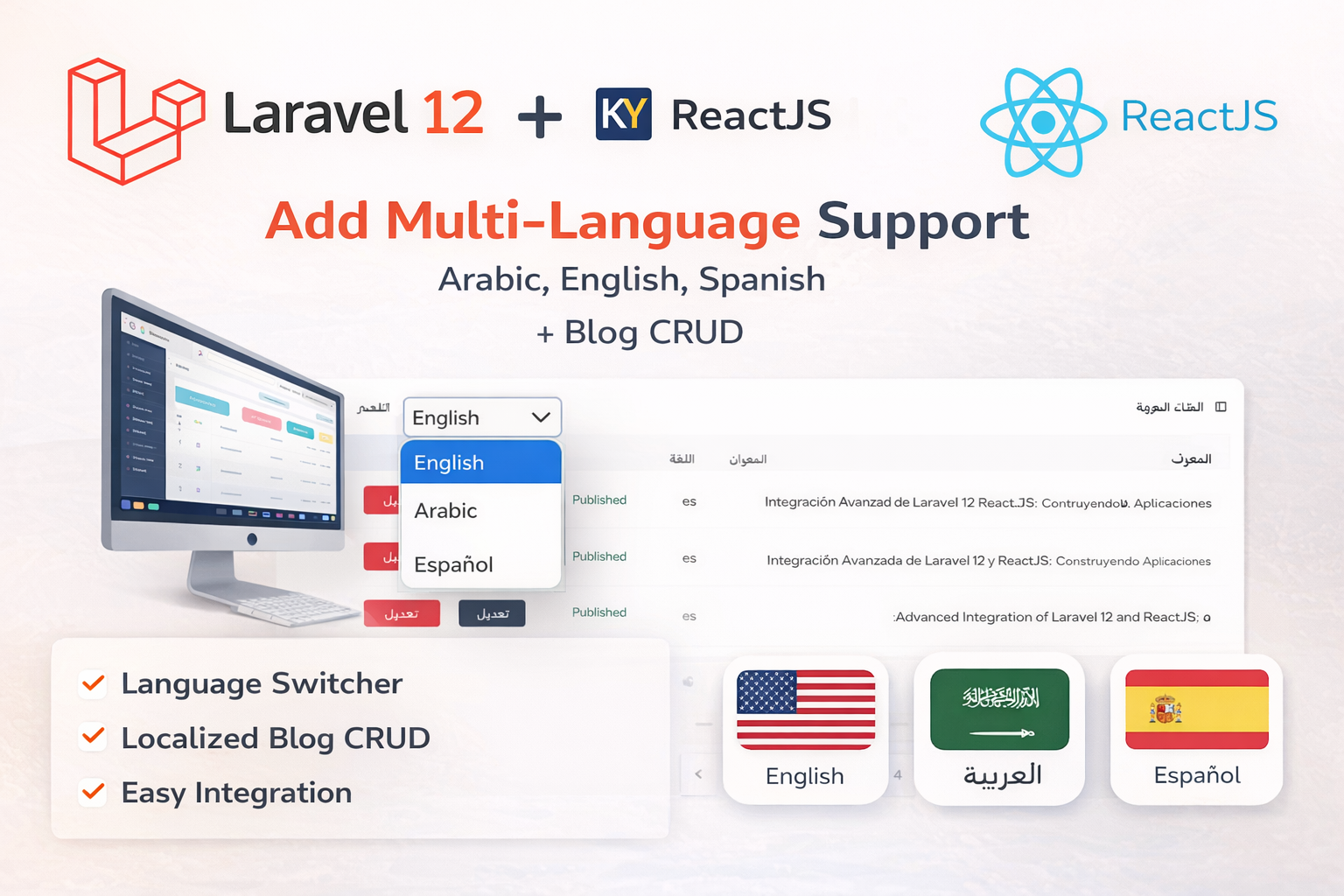
Laravel 12 + ReactJS Starter Kit: Add Multi-Language Support (Arabic, English, Spanish) with Blog CRUD
🚀 Installation & Setup Download & Extract Get the ZIP from kritimyantra.com and extract it. Includes preconfigu...
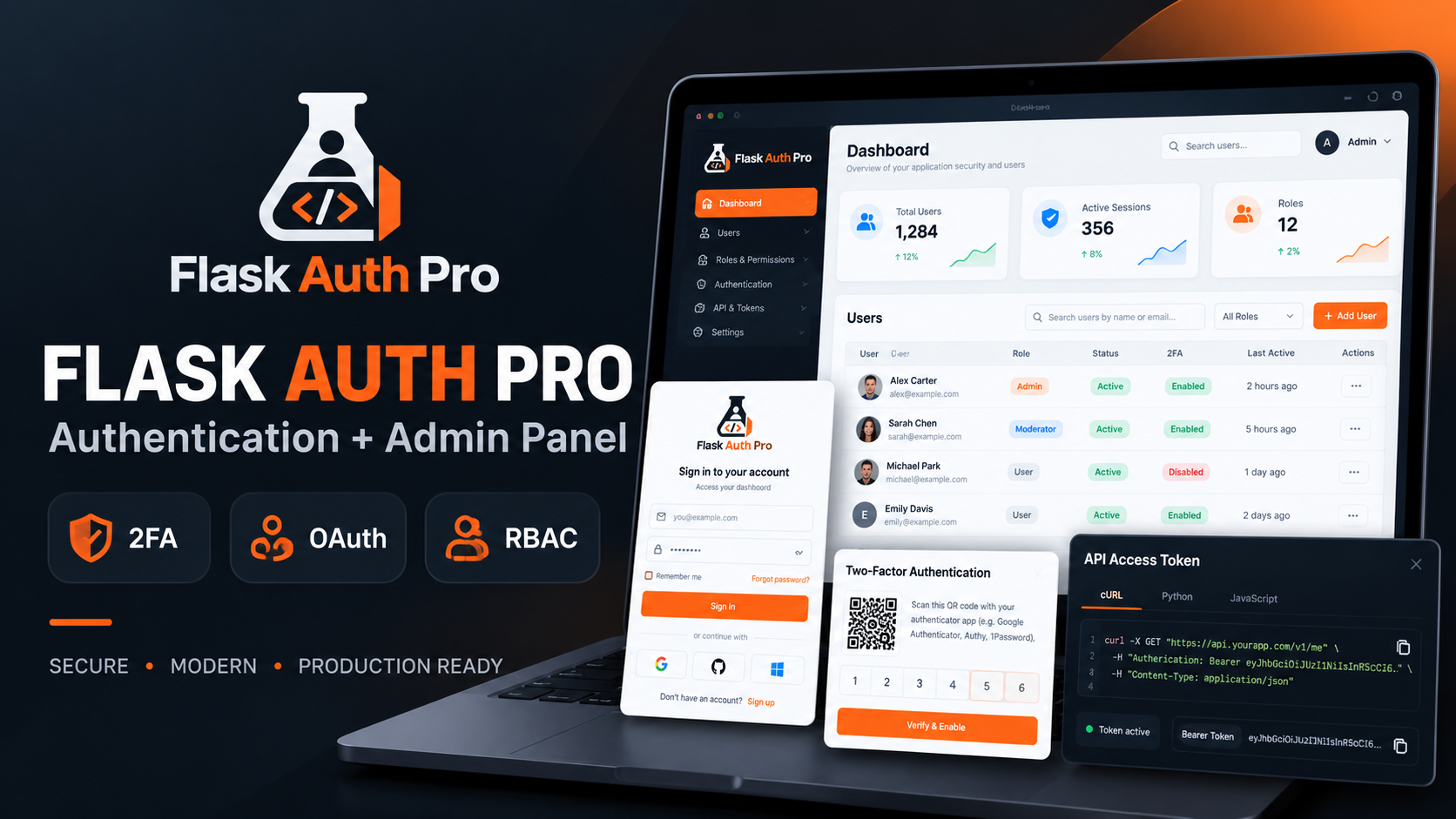
Flask Authentication System with Admin Panel - Kritim Yantra
Flask Auth Pro with Admin PanelA complete Flask authentication and user management system built for developers who want...

ColdStore Pro – Laravel Cold Storage Management System with Billing & Inventory
ColdStore Pro – Complete Cold Storage Management System ColdStore Pro is a complete Laravel-based management system buil...

Understanding SOLID Design Principles in Laravel (For Beginners)
Understanding SOLID Design Principles in Laravel (For Beginners) SOLID design principles are a set of guidelines that help develop...

Top 10 Essential Laravel 12 Packages for Your Next Project
Laravel 12: A Quick Overview Laravel 12 is the latest iteration of the beloved PHP framework, crafted for web artisans who value e...
Understanding PHP 8.4: A Beginner's Guide with Real-World Applications
PHP is one of the most popular server-side scripting languages, widely used for web development. Its simplicity and ease of use ma...
Understanding Laravel 12 Middleware
Welcome to this beginner-friendly guide on Laravel 12 middleware! If you're new to Laravel or web development, don’t worry—we’ll w...
Comments
No comments yet. Be the first to comment.
Sign in to join the discussion.