
Laravel 14 Upgrade Risks: Eloquent, Queues and Cache

A Laravel application can pass its test suite, boot successfully after an upgrade, and still behave differently in production.
An Eloquent relationship might be restored differently inside a queued job. A queue-monitoring listener might stop reading the event data it expects. A cache configuration change might make previously stored values inaccessible.
None of these necessarily produces an obvious failure during deployment.
As of October 16, 2026, Laravel 14 has no published official upgrade guide or confirmed list of breaking changes. Laravel 13, released on March 17, 2026, remains the current major version.
But Laravel 13 already gives us several useful clues about what to watch next.
The biggest framework upgrade risks aren't always removed APIs. They're changes to assumptions your application has quietly depended on for years.
1. Eloquent: When Familiar Models Behave Differently
Eloquent is one of Laravel's greatest strengths. It makes database interactions expressive, readable, and productive.
That familiarity can also make developers underestimate changes to model behavior.
Consider an interesting change documented in the Laravel 13 upgrade guide.
When collections of Eloquent models are serialized and subsequently restored, Laravel 13 now restores their eager-loaded relationships.
Previously, those relationships weren't restored for models inside serialized collections.
At first glance, this looks like a small consistency improvement. In certain applications, however, it can change how background operations behave.
Imagine dispatching a queued job containing hundreds of orders, each with an eager-loaded items relationship.
Before the change, code operating on the restored collection might encounter models without those relationships loaded.
With Laravel 13's updated behavior, the relationships may already be loaded when the job starts executing.
Why does that matter?
Because restoring a relationship doesn't necessarily mean restoring the exact data originally queried.
Laravel's queue documentation explains that model relationships are retrieved again from the database during deserialization. Constraints applied to relationships before dispatching are not automatically preserved.
A job that originally received a carefully constrained relationship could therefore work with a broader dataset when executed.
This creates several potential consequences:
- Additional database queries and greater memory consumption.
- Unexpected data being included in background processing.
- Business logic behaving differently depending on when the job executes.
- Performance regressions that ordinary controller tests never expose.
There's another detail worth noticing.
At the time of writing, Laravel's general queue documentation still describes the older collection-restoration behavior, while the Laravel 13 upgrade guide and framework implementation reflect the newer one.
That discrepancy reinforces an important engineering principle: when framework behavior matters to your application, verify it against the exact installed version and test it directly.
My preference for important background operations is to pass model identifiers rather than large, relationship-heavy Eloquent collections.
The job can then retrieve exactly the relationships and constraints it needs during execution.
For example, instead of relying on a serialized collection's relationship state, a processing job can receive order IDs and explicitly query those orders using with('items') inside its handle() method.
This does not solve every consistency problem. If a job requires the precise state that existed when it was dispatched, a versioned payload or immutable snapshot may be more appropriate.
The architectural decision is whether the job should process current database state or a historical snapshot.
That's a far more useful question than simply asking whether Eloquent serialization still works.
2. Queues: Your Jobs Can Work While Your Monitoring Breaks
Queues introduce a different class of upgrade risk because they operate outside the normal HTTP request lifecycle.
Laravel 13 provides two concrete examples.
The JobAttempted event previously exposed a boolean property called $exceptionOccurred.
In Laravel 13, it exposes $exception, containing the exception object or null.
Similarly, the QueueBusy event property $connection was renamed to $connectionName.
These are documented breaking changes, but their impact depends heavily on how an application uses queue events.
An application without custom listeners may never notice them.
A platform with custom monitoring, metrics collection, or operational dashboards could behave differently.
Imagine a monitoring listener that reads $event->exceptionOccurred to count unsuccessful job attempts.
After upgrading, that property no longer exists.
The queue worker itself may continue processing jobs successfully, while the monitoring code produces warnings, fails, or stops recording the expected metrics.
That's a dangerous type of regression because the application can appear healthy while its observability deteriorates.
Long-running workers make upgrades more complicated
Unlike ordinary PHP requests, Laravel queue workers remain alive across multiple jobs.
Laravel explicitly documents that workers don't automatically detect changes to application code after starting.
This matters during rolling deployments.
You could temporarily have old and new workers operating against the same queue. Jobs dispatched by one application version may be executed by another.
Whether that causes problems depends on the job payload, serialization format, and changes introduced by the deployment.
For applications with significant background processing, I would validate three things before approving a major upgrade:
- Can the new code process jobs created by the previous application version?
- Do retries and failed-job handlers still behave as expected?
- Do custom monitoring listeners continue receiving and interpreting the correct event data?
Worker lifecycle management should also be part of deployment planning.
Laravel provides php artisan queue:restart to gracefully restart workers after their current jobs finish. A process monitor must bring those workers back online.
One practical safeguard is to design important jobs to be idempotent wherever possible.
An idempotent job can be executed more than once without unintentionally repeating a business operation.
That's especially valuable for payments, inventory updates, customer notifications, and external API integrations.
A successful framework upgrade isn't just one where jobs execute. It's one where jobs execute correctly, failures remain visible, and retries remain safe.
3. Cache: Small Configuration Changes Can Have Large Consequences
Cache upgrades are easy to underestimate because caching is usually treated as a performance concern.
In real applications, caching can also influence authorization, pricing, distributed locks, rate limiting, and coordination between processes.
Laravel 13 introduced a security-focused cache configuration change that illustrates this perfectly.
The default application cache configuration now includes:
'serializable_classes' => false
This setting restricts the classes Laravel permits when unserializing cached PHP objects.
Its purpose is to reduce exposure to PHP deserialization gadget-chain attacks under circumstances such as an application key compromise.
The security improvement makes sense.
However, applications that intentionally cache PHP objects need to review how those objects are stored and restored.
If the restrictive configuration is adopted, previously supported object payloads may no longer deserialize as expected.
Laravel recommends explicitly listing permitted classes when object serialization is necessary.
For many applications, storing arrays or other simpler cache payloads may be a cleaner alternative.
One important distinction: this is a change to the default configuration. Existing applications with their own configuration files do not necessarily inherit it simply by updating Composer dependencies.
That distinction matters when planning an upgrade.
Cache prefixes are another hidden dependency
Laravel 13 also changed framework-level fallback cache and Redis key prefixes from underscore-based to hyphenated formats.
Most applications with explicitly defined prefixes will not be affected.
But applications relying on generated fallback values can effectively begin reading a different set of cache keys after upgrading.
The data might still exist in Redis, but the application is looking under a different namespace.
That can cause widespread cache misses or coordination problems during a deployment.
The interesting connection is that Laravel's queue restart mechanism also uses the cache to communicate restart signals.
If different application processes unexpectedly use different cache namespaces, worker coordination may become more difficult.
This is why I don't treat caching as an isolated subsystem during framework upgrades.
I would verify cache prefixes, serialized payload formats, distributed locks, and worker restart behavior together.
The technical change might be tiny. Its operational effect might not be.
4. A Better Way to Prepare for Laravel 14
It's reasonable to argue that Laravel upgrades generally aren't especially difficult.
Laravel deliberately aims to minimize breaking changes, provides detailed upgrade guides, and follows a predictable annual major-release cadence.
For a conventional application using supported framework APIs, the upgrade may indeed be straightforward.
But upgrade difficulty depends on more than application size.
A relatively small application with extensive queue processing, custom Eloquent behavior, and shared Redis infrastructure may face more meaningful risks than a larger application with simpler execution patterns.
After roughly eight years of working with Laravel, I think the most useful distinction is between code compatibility and behavioral compatibility.
Composer can tell us whether our dependencies can be resolved.
A passing test suite tells us whether the behaviors covered by those tests still work.
Neither guarantees that serialized data, background workers, or persistent infrastructure will behave correctly across deployment boundaries.
For Laravel 14, I would prepare an upgrade process around those boundaries rather than speculating about unannounced API changes.
What I'd test before a major upgrade
Eloquent and serialization
Identify jobs receiving Eloquent models or collections. Test relationship restoration, query counts, missing records, and constrained relationships using the target framework version.
Queues and background processing
Create jobs using the old application version and process them using the upgraded version in a staging environment. Verify retries, failure handling, queue events, and custom metrics.
Cache and shared infrastructure
Test existing cached payloads against the proposed configuration. Verify prefixes, locks, and restart signals. Avoid changing cache namespaces unintentionally during a rolling deployment.
Dependencies and deployment
Use composer why-not to investigate dependency constraints when introducing a new framework version. Verify PHP compatibility, package support, worker restart procedures, and rollback requirements.
Production observability
Monitor more than HTTP error rates. Watch queue latency, failed jobs, cache misses, database query volume, and business-critical operations during rollout.
These checks are not specific to Laravel 14. They're lessons from confirmed changes in earlier releases that can make future upgrades safer.
I would also keep framework version changes separate from unrelated architectural refactoring when practical.
Smaller, focused changes are easier to test, review, and reverse.
The Real Breaking Change Is Often an Assumption
Laravel 14's actual breaking changes will only become clear when its official release documentation is available.
Until then, presenting predicted Eloquent, queue, or cache changes as confirmed features would be misleading.
What we can learn from Laravel 13 is more valuable.
An ORM improvement can change what data a queued job receives. An event property rename can affect monitoring without stopping job execution. A cache security improvement can require changes to long-standing storage patterns.
Each example points to the same conclusion.
Framework upgrades become risky when implicit behavior has quietly become part of your application's contract.
The best preparation isn't memorizing every new framework feature.
It's knowing which behaviors your business depends on, making those expectations explicit, and testing them before the framework changes underneath them.
That's the mindset I'd take into Laravel 14—and every major upgrade after it.
Projects to explore next
Source-code projects from the KritiMyantra catalogue. Check each project's details before buying.
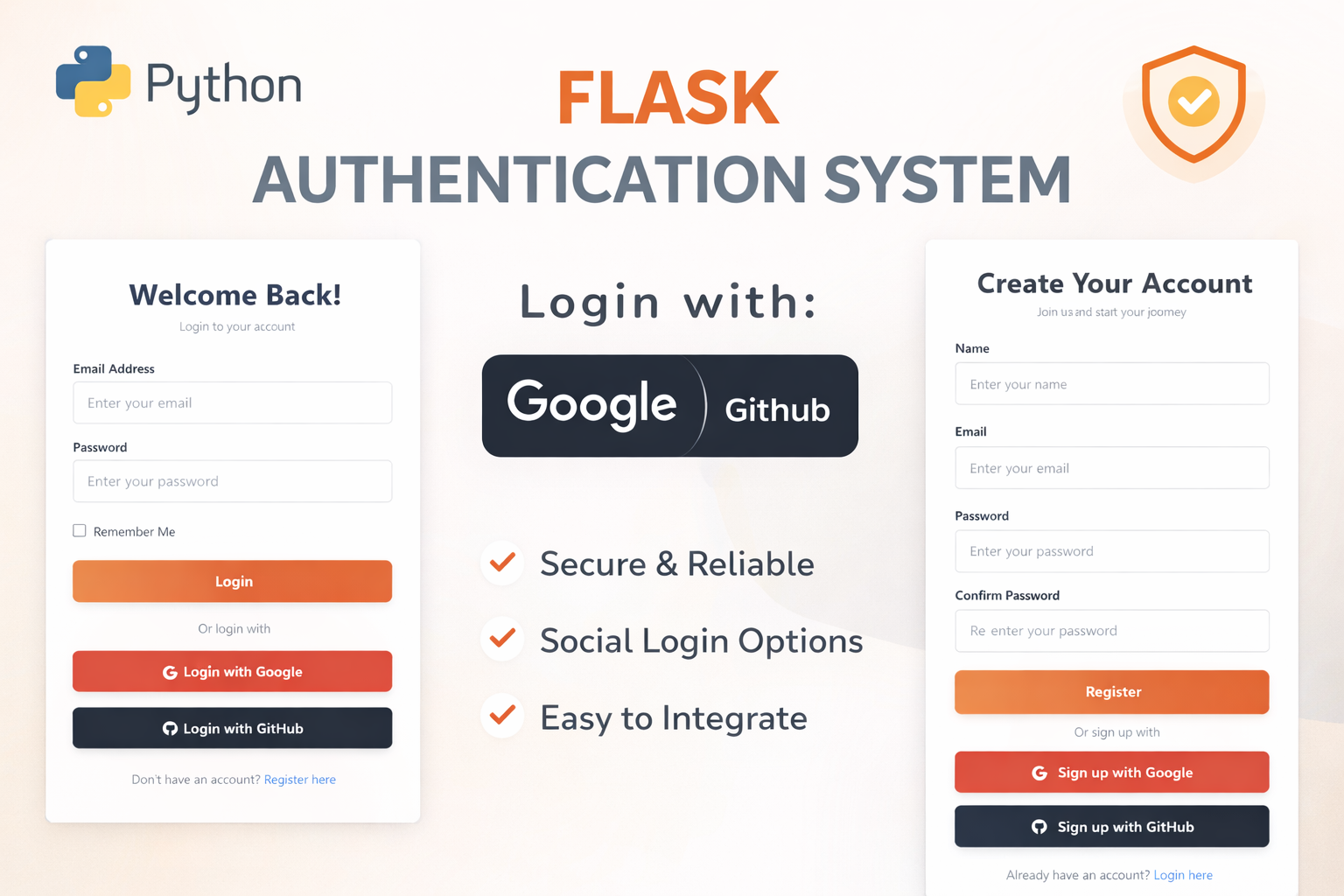
Flask Authentication System (Free Version) - Kritim Yantra
🛠 Features✔ Google & GitHub Authentication✔ User Registration & Login✔ Profile/Dashboard Access✔ Secure & Mi...

Flask Blog CMS with Admin Dashboard — Python Source Code
A Flask-based blogging website with a built-in admin dashboard. Manage articles, images, categories, tags and featured p...
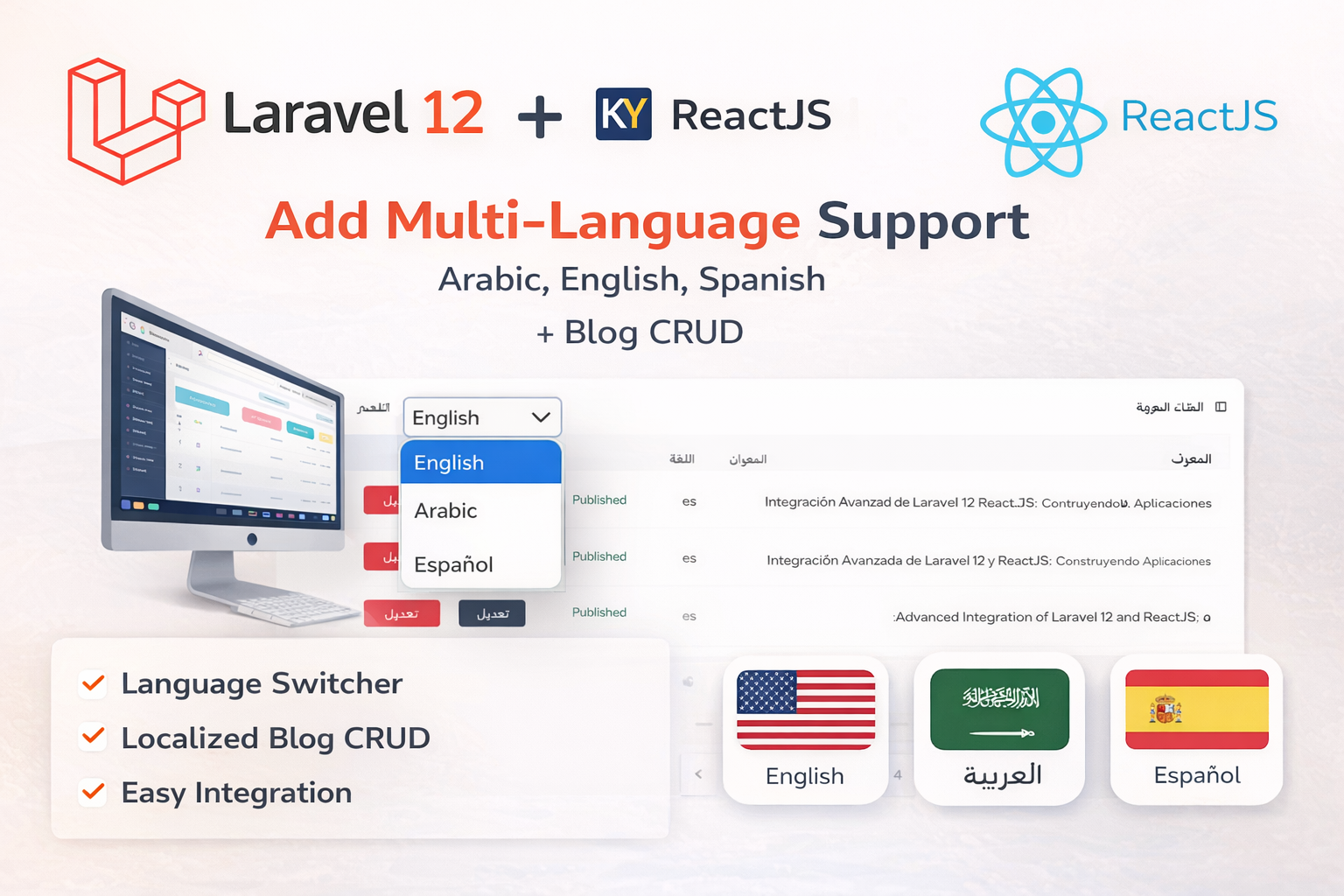
Laravel 12 + ReactJS Starter Kit: Add Multi-Language Support (Arabic, English, Spanish) with Blog CRUD
🚀 Installation & Setup Download & Extract Get the ZIP from kritimyantra.com and extract it. Includes preconfigu...
8 Years With Laravel: What AI Coding Still Gets Wrong
AI can write Laravel controllers, generate migrations, build APIs, and even troubleshoot complex applications. But after eight yea...

PHP Isn't Dead. AI Might Give It a Second Life.
AI is changing how software gets built. But the biggest opportunity for PHP might have less to do with generating code and more to...

Laravel 14 isn't here yet. But you can already build serious AI agents with Laravel today.
Laravel 14 is on the horizon, but the foundations of AI-native development are already here. Here's how I'd architect a Laravel AI...
Preparing for Laravel 14: PHP 8.4, Symfony 8, and Breaking Changes You Can Investigate Now
The next Laravel upgrade is not just about framework compatibility. It is an opportunity to discover how much your application dep...
Laravel 14 Release Date: What's Confirmed for 2027
Laravel 14 is already being discussed, but there is an important difference between knowing when a framework is likely to arrive a...
Laravel 14 and PHP 8.4: Why Symfony 8 Matters
Laravel 14 is expected to raise its minimum PHP requirement to 8.4. At first glance, that might look like another routine version...
Comments
No comments yet. Be the first to comment.
Sign in to join the discussion.