
Laravel 14 Release Date: What's Confirmed for 2027

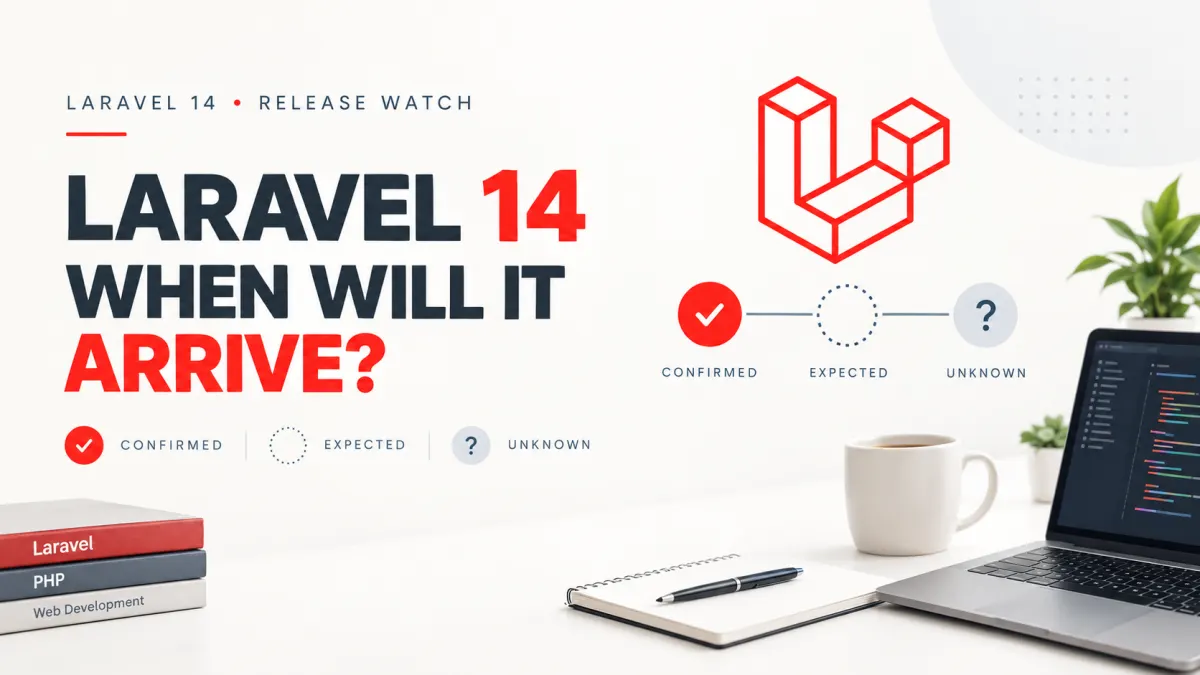
Laravel 14 is already being discussed, but there is an important difference between knowing when a framework is likely to arrive and having an officially confirmed release date.
As of October 2026, Laravel 14 is expected in the first quarter of 2027, but the Laravel team has not announced an exact release date.
That distinction matters for developers maintaining production applications. A release estimate might help with planning, but it should not become the foundation of an upgrade strategy.
The more interesting question is not simply when Laravel 14 will launch. It is what we can reliably establish today, what the framework's development activity tells us, and whether waiting for the next major release is actually the right decision.
What Is Officially Confirmed About Laravel 14?
Laravel follows an annual major release cycle, with new versions generally arriving during the first quarter of the year.
This is documented in Laravel's official release notes, which describe major releases as occurring annually, approximately in Q1.
Looking at recent versions, the pattern is consistent:
| Laravel Version | Release Date | Status |
|---|---|---|
| Laravel 11 | March 12, 2024 | Released |
| Laravel 12 | February 24, 2025 | Released |
| Laravel 13 | March 17, 2026 | Released |
| Laravel 14 | Q1 2027 | Expected, not officially scheduled |
Laravel 13 is currently the latest stable major version.
Given the established release cadence, expecting Laravel 14 between January and March 2027 is reasonable. February or March may be more plausible based on recent history, but choosing either month as a definitive release date would be speculation.
An established release pattern is evidence of intent, not a guarantee of delivery.
Laravel has previously adjusted its release schedule. Laravel 9, for example, arrived in February 2022 after its originally planned September 2021 release was postponed to align with newer Symfony components.
Framework releases involve dependency compatibility, testing, documentation, and decisions that can affect thousands of applications.
That is why I would treat Q1 2027 as a planning window, not a contractual deadline.
What Does Laravel 14's Development Tell Us?
Although a stable Laravel 14 release is not available, development is already underway.
Laravel's contribution guidelines explain how changes are organized:
- Bug fixes and backward-compatible features generally target the latest supported stable branch.
- Major features and changes that break backward compatibility target the
masterbranch. - That development branch contains work intended for the next major framework release.
This means developers can examine work planned for Laravel 14 before an official feature announcement.
However, merged development code is not the same thing as a finalized release specification. APIs, implementation details, and upgrade requirements may still change.
PHP 8.4 is the most important requirement to watch
One particularly useful development is already visible.
Laravel's maintainers merged pull request #59104 on March 5, 2026, preparing the master branch for Laravel 14 and raising the minimum PHP requirement to 8.4.
The current framework composer.json on master declares:
"php": "^8.4"
Laravel 13, by comparison, requires PHP 8.3 or newer.
This is stronger evidence than a community prediction: the minimum PHP version has actually changed in the development branch.
Still, the distinction matters. PHP 8.4 is the current development requirement for Laravel 14, while its final release requirements will only be definitive once the framework is officially released.
For teams running PHP 8.3 or older, this is already enough information to begin evaluating infrastructure compatibility.
The PHP upgrade may involve more work than the framework upgrade itself, particularly where hosting environments, extensions, deployment images, or third-party packages are involved.
What's Still Unknown About the Laravel 14 Release?
Despite the available information, several important details remain unconfirmed.
The exact release date: There is no officially announced calendar date for the stable Laravel 14 release.
The final feature list: Development changes offer useful clues, but they do not establish which features will ship in their current form.
The complete breaking-change list: Until the final upgrade guide is published, developers cannot know every application-level change required to migrate from Laravel 13.
The actual upgrade effort: Laravel generally aims to make major-version upgrades straightforward, but complexity depends on the application and its dependencies.
Laravel 13 itself demonstrates why predicting a major release from a list of anticipated features can be misleading.
The framework introduced significant capabilities, including its first-party AI SDK and JSON:API resources, while continuing to emphasize minimal breaking changes.
Many Laravel improvements also arrive through backward-compatible minor releases rather than waiting for the next major version.
In other words, a major version number is increasingly useful as a compatibility boundary, not necessarily as an indication of how much new functionality arrives on one particular day.
For developers following Laravel 14, I would pay more attention to the official upgrade guide and dependency requirements than to speculative feature lists.
The Timeline That Matters More Than Laravel 14's Launch Date
There is another date that deserves more attention: February 24, 2027.
That is when Laravel 12's official security support ends.
Under Laravel's support policy, major releases receive approximately 18 months of bug fixes and two years of security fixes.
Here is the current support position:
| Version | Bug Fixes Until | Security Fixes Until |
|---|---|---|
| Laravel 12 | August 13, 2026 | February 24, 2027 |
| Laravel 13 | Q3 2027 | March 17, 2028 |
Source: Laravel's official support policy.
This creates an important planning consideration.
If Laravel 14 arrives in March 2027, applications still running Laravel 12 will have already passed their official security-support deadline.
A development team that decides to skip Laravel 13 and wait directly for Laravel 14 could therefore create a period where its framework version no longer receives official security fixes.
That may be acceptable in some carefully managed circumstances, but it should be an explicit risk decision rather than an accidental consequence of waiting.
How I would approach the upgrade
After roughly eight years working with Laravel, my preference is to separate release anticipation from maintenance decisions.
For an application currently running Laravel 12, I would prioritize a controlled upgrade to Laravel 13 rather than make its security position depend on Laravel 14 arriving early.
For an application already running Laravel 13, the situation is different. There is no immediate need to adopt Laravel 14 on release day. Laravel 13's published support window provides room to assess the new version, review breaking changes, and verify package compatibility.
Meanwhile, teams can begin checking their readiness for PHP 8.4.
Composer provides a useful command:
composer prohibits php 8.4
This identifies installed packages whose declared requirements prevent the specified PHP version. It is not a Laravel 14 compatibility test, but it can reveal dependency constraints before an upgrade begins.
I would also make sure PHP 8.4 is covered by automated tests, review the versions supported by essential Laravel packages, and confirm that staging and production environments can run the intended PHP version.
An alternative approach is to wait and perform a single direct upgrade to Laravel 14. That can be reasonable for a small application with a manageable risk profile, especially if the next release arrives before its current version loses support.
But skipping an intermediate version does not automatically eliminate the work introduced by that version's breaking changes. It may simply combine multiple compatibility changes into one larger upgrade.
The better decision depends on support deadlines, dependency readiness, test coverage, and business risk—not just the number of upgrade steps.
Final Thoughts: Plan Around What Is Known
Laravel 14 is expected in Q1 2027. The development branch already targets PHP 8.4, and the framework's established support policy gives developers a reasonable basis for forward planning.
What we still do not have is an officially confirmed release date or a final upgrade guide.
I don't see that uncertainty as a reason to delay preparation. Most of the useful preparation—updating dependencies, testing newer PHP versions, improving automated coverage, and reviewing support deadlines—can happen before Laravel 14 is released.
The release date will eventually become official. By then, the teams that treated it as a planning milestone rather than a deadline will have more freedom to choose when upgrading makes sense.
The goal isn't to upgrade on the day Laravel 14 launches. It's to be ready to upgrade when the technical and business conditions are right.
Projects to explore next
Source-code projects from the KritiMyantra catalogue. Check each project's details before buying.
Flask Authentication System (Free Version) - Kritim Yantra
🛠 Features✔ Google & GitHub Authentication✔ User Registration & Login✔ Profile/Dashboard Access✔ Secure & Mi...

Flask Blog CMS with Admin Dashboard — Python Source Code
A Flask-based blogging website with a built-in admin dashboard. Manage articles, images, categories, tags and featured p...
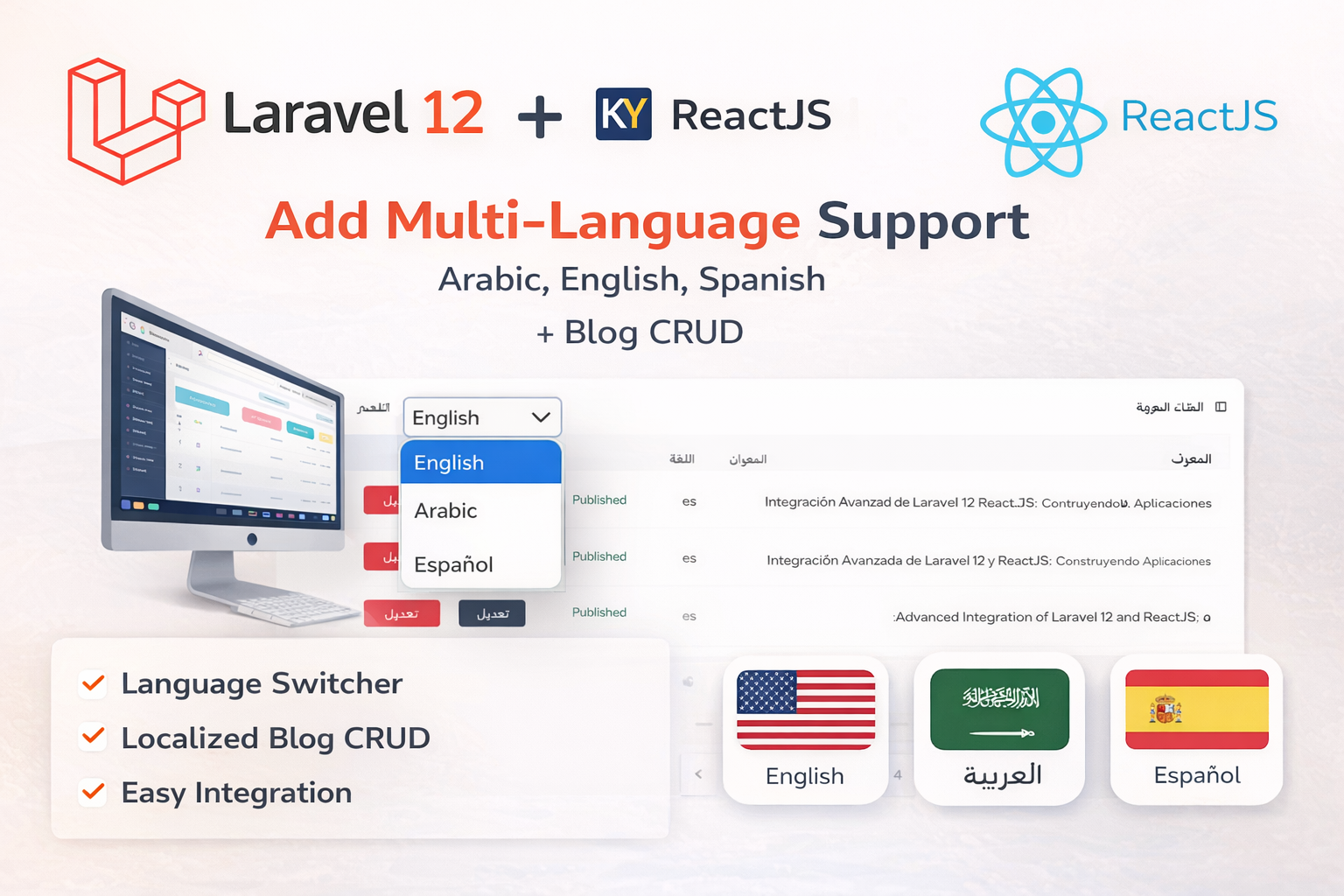
Laravel 12 + ReactJS Starter Kit: Add Multi-Language Support (Arabic, English, Spanish) with Blog CRUD
🚀 Installation & Setup Download & Extract Get the ZIP from kritimyantra.com and extract it. Includes preconfigu...

Laravel 14: 12 Features It Needs in the AI Era
Laravel 14 Shouldn't Just Add More AI. It Should Change How We Build Software. 12 things I want from Laravel 14 after eight years...
AI Can Build a Laravel App in Minutes. But Can It Maintain One for Five Years?
AI is making software development faster. But the real test of a Laravel application isn't how quickly it can be generated. It's w...

8 Years With Laravel: What AI Coding Still Gets Wrong
AI can write Laravel controllers, generate migrations, build APIs, and even troubleshoot complex applications. But after eight yea...

PHP Isn't Dead. AI Might Give It a Second Life.
AI is changing how software gets built. But the biggest opportunity for PHP might have less to do with generating code and more to...

Laravel 14 isn't here yet. But you can already build serious AI agents with Laravel today.
Laravel 14 is on the horizon, but the foundations of AI-native development are already here. Here's how I'd architect a Laravel AI...
Preparing for Laravel 14: PHP 8.4, Symfony 8, and Breaking Changes You Can Investigate Now
The next Laravel upgrade is not just about framework compatibility. It is an opportunity to discover how much your application dep...
Comments
No comments yet. Be the first to comment.
Sign in to join the discussion.