
The Exact Laravel Skills Companies Pay For in 2026

I still remember deploying my first Laravel project.
It worked perfectly on my laptop. Then it hit production… and everything slowed to a crawl. Pages loaded forever, queues failed silently, and I had no idea why. 😅
If you’ve ever thought, “It works locally—why is production so painful?” — you’re not alone.
Here’s the truth I learned the hard way: companies don’t just pay for “Laravel knowledge.”
They pay for developers who know how to make Laravel fast, secure, scalable, and reliable in the real world.
Let’s break down the exact Laravel skills companies are paying for in 2026, explained in a friendly, beginner-safe way.
1. Rock-Solid Laravel Fundamentals (Still Non-Negotiable)
Before anything fancy, companies expect you to master the basics properly.
That means you’re comfortable with:
- Routing & Controllers – clean, readable request handling
- Blade templates – not messy PHP-in-HTML chaos
- Eloquent ORM – relationships, scopes, eager loading
- Migrations & Seeders – version-controlled databases
Think of this like learning to cook.
Before gourmet dishes, you must know how to hold the knife properly .
Pro Tip
If you can explain why you used a controller, job, or service class — not just how — you’re already ahead.
2. Performance Optimization (This Is Where the Money Is)
In 2026, slow apps don’t survive.
Companies love Laravel developers who know how to make apps feel instant.
Key performance skills employers want:
- Query optimization (no accidental N+1 queries)
- Caching (Redis, query caching, response caching)
- Queues & Jobs (offloading heavy tasks)
- Config & route caching for production
Real-life example
I once saw a dashboard loading 3,000 database queries… for one page.
After eager loading and caching?
➡️ Page load dropped from 6 seconds to under 400ms.
Warning ️
If you’ve never used php artisan optimize, you’re leaving free performance on the table.
3. Testing Skills (Laravel Devs Who Test Get Paid More)
Here’s a little secret
Most junior developers skip testing. Companies notice.
By 2026, employers expect you to:
- Write feature tests for core user flows
- Use Pest or PHPUnit comfortably
- Mock APIs, queues, and notifications
- Understand CI pipelines (GitHub Actions, GitLab CI)
Testing is like a seatbelt.
You may not need it every day — but when things go wrong, it saves your job.
Pro Tip 💡
Start small: test logins, registrations, and payments first.
4. API & Integration Skills (Laravel Is No Longer “Just Backend”)
Modern Laravel apps talk to everything.
Companies pay more if you can:
- Build REST & JSON APIs properly
- Secure APIs with Sanctum or OAuth
- Integrate third-party services (Stripe, Slack, AWS)
- Handle webhooks without breaking things
Analogy time
Your Laravel app is like a busy receptionist.
If it can’t communicate clearly with other systems, chaos follows.
5. Security Awareness (Huge Hiring Filter)
Security mistakes are expensive — and embarrassing.
In 2026, Laravel devs must understand:
- Validation & mass assignment protection
- Authentication & authorization (Policies, Gates)
- Rate limiting & CSRF protection
- Secure file uploads and encrypted data
Warning ️
If you blindly trust user input, production will humble you fast.
6. Deployment, DevOps & Cloud Basics (Career Accelerator)
Here’s where many developers feel intimidated — but don’t worry.
Companies don’t expect you to be a DevOps wizard.
They do expect you to understand:
- Environment variables (
.env) - Queues & workers in production
- Docker basics or Laravel Sail
- Deployments on AWS, DigitalOcean, or Forge
Even knowing what breaks during deployment makes you incredibly valuable.
Pro Tip 💡
Learn one deployment flow end-to-end. Just one. That’s enough to stand out.
7. Clean Code & Team Skills (The Silent Salary Booster)
Laravel skills alone won’t save bad code.
Companies want developers who:
- Write readable, self-documenting code
- Use service classes & actions
- Follow PSR standards
- Communicate clearly in code reviews
Think of clean code like keeping your room tidy .
Others can find things quickly — and they enjoy working with you.
Quick Skill Checklist (Save This )
If you’re aiming for a well-paid Laravel role in 2026, focus on:
- ✅ Strong Laravel fundamentals
- ✅ Performance & caching
- ✅ Automated testing
- ✅ API development
- ✅ Security best practices
- ✅ Deployment basics
- ✅ Clean, team-friendly code
Beginner FAQ
1. Do I need to learn everything at once?
Nope. Start with fundamentals → performance → testing. One step at a time.
2. Is Laravel still worth learning in 2026?
Absolutely. Laravel is mature, trusted, and heavily used in real businesses.
3. Should I focus on frontend or backend skills?
Backend first. Solid Laravel backend skills pay consistently, especially with API knowledge.
Final Thoughts (From Someone Who’s Been There)
If you’re feeling overwhelmed, trust me — I’ve been there.
You don’t need to be perfect. You just need to be intentional about learning the skills companies actually pay for.
👉 Your next action:
Pick one skill from this list (performance, testing, or deployment) and practice it on a real project this week.
Projects related to this guide
Use the concepts from this article in practical source-code projects.
 Web Development
Free
Preview
Web Development
Free
Preview
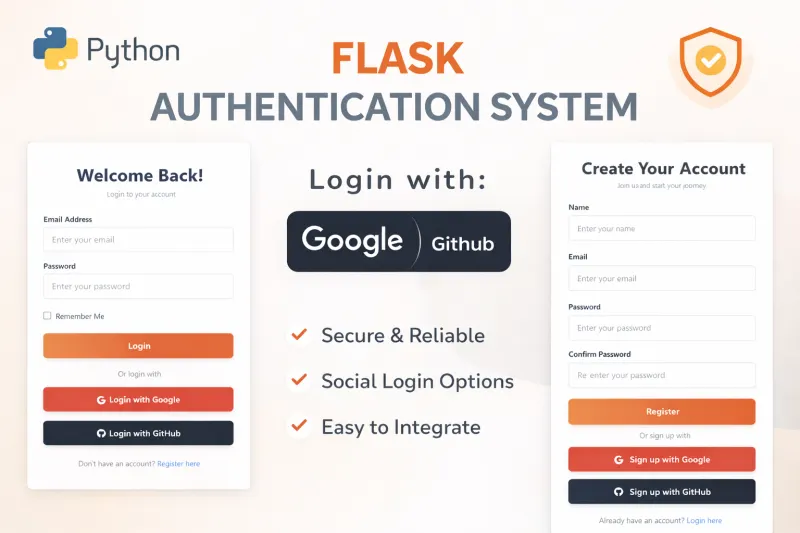
Flask Authentication System (Free Version) - Kritim Yantra
🛠 Features✔ Google & GitHub Authentication✔ User Registration & Login✔ Profile/Dashboard Access✔ Secure...
 Web Development
₹399
Preview
Web Development
₹399
Preview
Python Flask Blog Project with Admin Panel
Are you ready to launch a powerful, modern, and fully customizable blog? Look no further! Introducing the Flask-...
 Web Development
₹299
Preview
Web Development
₹299
Preview
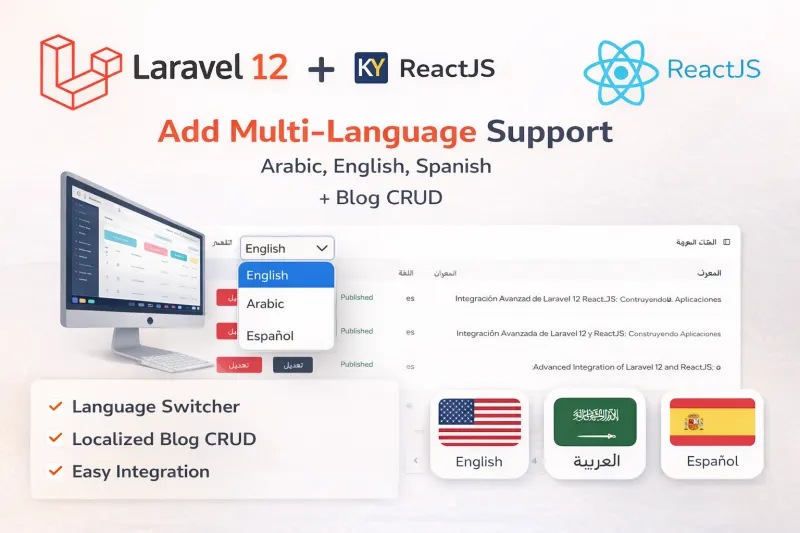
Laravel 12 + ReactJS Starter Kit: Add Multi-Language Support (Arabic, English, Spanish) with Blog CRUD
🚀 Installation & Setup Download & Extract Get the ZIP from kritimyantra.com and extract it. Includes pr...
Laravel for Serious Developers: What Actually Matters
Laravel is often praised for being “developer-friendly,” but that label sometimes undersells it. For serious developers—those buil...
Laravel vs Node.js in 2026 — Which Should You Learn?
Choosing the right backend technology in 2026 can feel overwhelming. You search online and see endless debates: “Laravel is dead”...
PHP 8.0 → 8.5: A Deep, Practical Guide for Real-World Developers
Modern PHP explained with realistic, production-style examples PHP 8 didn’t just add features — it changed how PHP applications ar...
Comments
No comments yet. Be the first to comment.
Sign in to join the discussion.