
Mastering Laravel 12 Controllers: A Comprehensive Guide with Examples

Laravel controllers are the backbone of your application's HTTP layer, acting as intermediaries between routes and your business logic. In this guide, we’ll explore Laravel 12 controllers in depth, complete with practical examples and best practices.
Instead of writing all your route logic in routes/web.php, controllers help keep your code clean, separate concerns effectively, and enable the reuse of common functionality—all while following RESTful conventions.
What are Controllers in Laravel?
Controllers organize your application's request-handling logic using PHP classes. They allow you to group related request logic into a single class, making your application easier to maintain and more scalable.
- Keep code clean and maintainable
- Separate concerns effectively
- Enable reuse of common functionality
- Follow RESTful conventions
Creating Your First Controller
1. Generate a Controller
Use Artisan to create a controller:
composer artisan make:controller PostController
This creates app/Http/Controllers/PostController.php:
<?php

namespace App\Http\Controllers;

use Illuminate\Http\Request;

class PostController extends Controller
{
    // Controller methods go here
}
2. Basic Controller Example
Let's add some simple methods:
<?php

namespace App\Http\Controllers;

use App\Models\Post;
use Illuminate\Http\Request;

class PostController extends Controller
{
    public function index()
    {
        return view('posts.index');
    }

    public function show($id)
    {
        $post = Post::findOrFail($id);
        return view('posts.show', compact('post'));
    }
}
3. Connect to Routes
In routes/web.php, connect your controller to routes:
<?php
use App\Http\Controllers\PostController;

// Individual routes
Route::get('/posts', [PostController::class, 'index']);
Route::get('/posts/{id}', [PostController::class, 'show']);

// Resource route (creates multiple routes)
Route::resource('posts', PostController::class);
Types of Controller Methods
1. Resource Controller Methods
Generate a resource controller with:
php artisan make:controller PostController --resourceThis creates methods for standard RESTful actions:
| HTTP Method | URI | Action | Route Name |
|---|---|---|---|
| GET | /posts | index | posts.index |
| GET | /posts/create | create | posts.create |
| POST | /posts | store | posts.store |
| GET | /posts/{post} | show | posts.show |
| GET | /posts/{post}/edit | edit | posts.edit |
| PUT/PATCH | /posts/{post} | update | posts.update |
| DELETE | /posts/{post} | destroy | posts.destroy |
2. API Resource Controllers
For APIs (excluding create/edit views), you can generate an API resource controller:
php artisan make:controller API/PostController --apiExample API controller:
<?php

namespace App\Http\Controllers;

use App\Models\Post;
use Illuminate\Http\Request;

class PostController extends Controller
{
    public function index()
    {
        return Post::all();
    }

    public function store(Request $request)
    {
        $validated = $request->validate([
            'title' => 'required|max:255',
            'content' => 'required'
        ]);

        $post = Post::create($validated);
        return response()->json($post, 201);
    }
}
Advanced Controller Features
1. Dependency Injection
Laravel 12 automatically resolves dependencies through the service container. For example, injecting a service:
<?php
public function store(Request $request, PostService $postService)
{
    $post = $postService->createPost($request->validated());
    return redirect()->route('posts.show', $post);
}
2. Form Request Validation
Create dedicated request classes for validation:
php artisan make:request StorePostRequest
In app/Http/Requests/StorePostRequest.php:
<?php
public function rules()
{
    return [
        'title' => 'required|max:255',
        'content' => 'required|min:100',
        'published_at' => 'nullable|date'
    ];
}
Then use it in your controller:
<?php
public function store(StorePostRequest $request)
{
    $validated = $request->validated();
    Post::create($validated);
    return redirect()->route('posts.index');
}
3. Resource Responses (API)
Transform your data using API resources:
php artisan make:resource PostResourceIn your controller:
<?php
public function show(Post $post)
{
    return new PostResource($post);
}

public function index()
{
    return PostResource::collection(Post::paginate(20));
}
Best Practices for Laravel 12 Controllers
- Keep Controllers Lean: Move business logic to service classes and use repositories for data operations.
- Use Resourceful Controllers: Follow RESTful conventions for consistent endpoints and route model binding.
- Single Responsibility Principle: Each method should handle one specific task. Avoid complex logic.
- Proper Error Handling: Use try-catch blocks and return meaningful responses.
- Leverage Route Model Binding: Automatically resolve models from route parameters.
Common Controller Patterns
1. Invokable Controllers
Single-action controllers can be created with:
php artisan make:controller PublishPostController --invokableExample implementation:
<?php
class PublishPostController extends Controller
{
    public function __invoke(Post $post)
    {
        $post->publish();
        return redirect()->route('posts.show', $post);
    }
}
Route:
Route::post('/posts/{post}/publish', PublishPostController::class);2. Nested Controllers
For related resources, use nested controllers. For example:
Route::resource('posts.comments', CommentController::class);In your controller:
<?php
public function store(Post $post, Request $request)
{
    $comment = $post->comments()->create($request->validated());
    return redirect()->route('posts.show', $post);
}
Conclusion
Laravel controllers are powerful tools for organizing your application's logic. By following best practices—keeping controllers lean, using resourceful controllers, and leveraging features like dependency injection and route model binding—you can build robust and maintainable applications.
Whether you're building a simple blog or a complex RESTful API, these patterns and techniques help improve development speed, code clarity, and collaboration across your team.
Happy coding!
Projects to explore next
Source-code projects from the KritiMyantra catalogue. Check each project's details before buying.
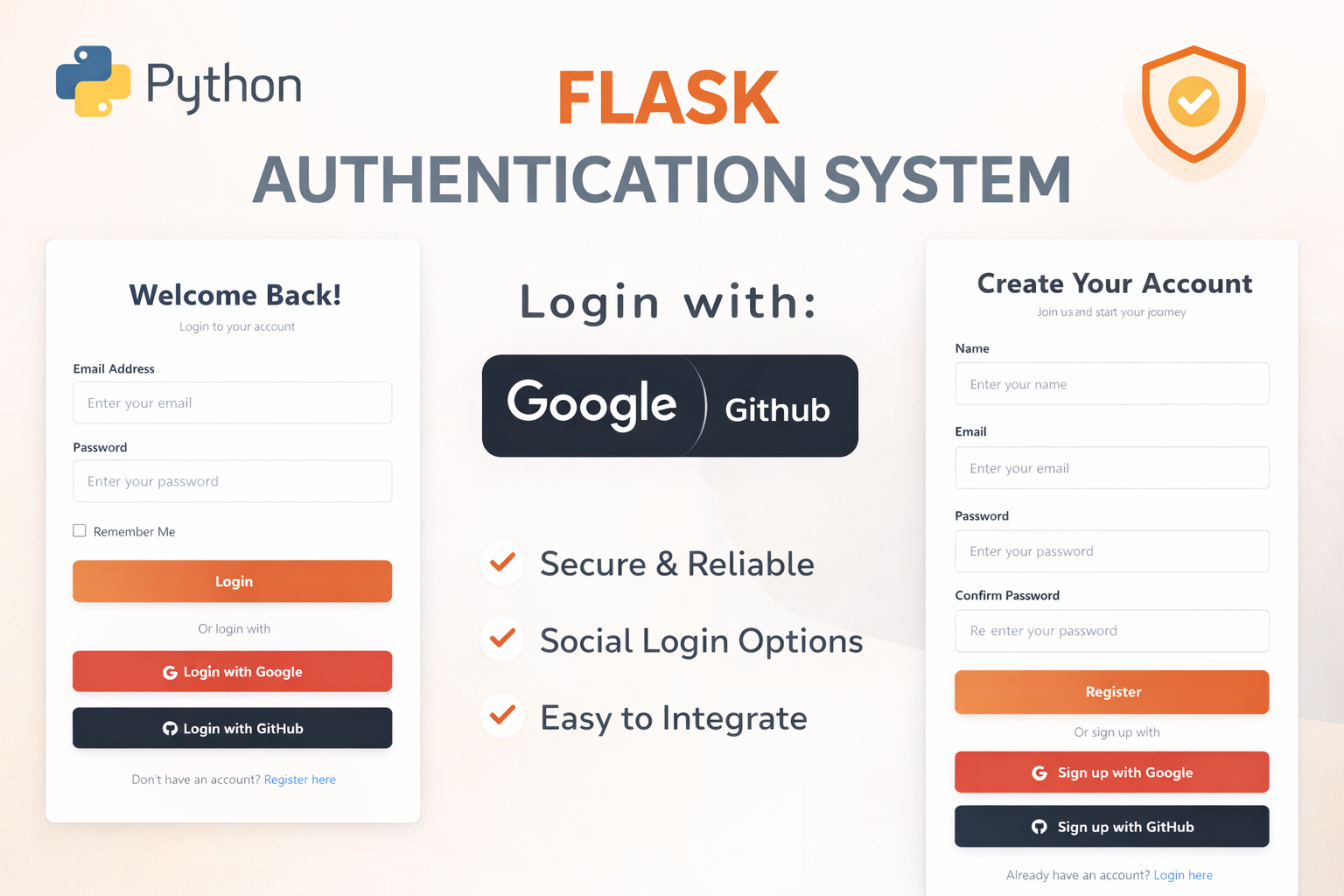
Flask Authentication System (Free Version) - Kritim Yantra
🛠 Features✔ Google & GitHub Authentication✔ User Registration & Login✔ Profile/Dashboard Access✔ Secure & Mi...

Flask Blog CMS with Admin Dashboard — Python Source Code
A Flask-based blogging website with a built-in admin dashboard. Manage articles, images, categories, tags and featured p...
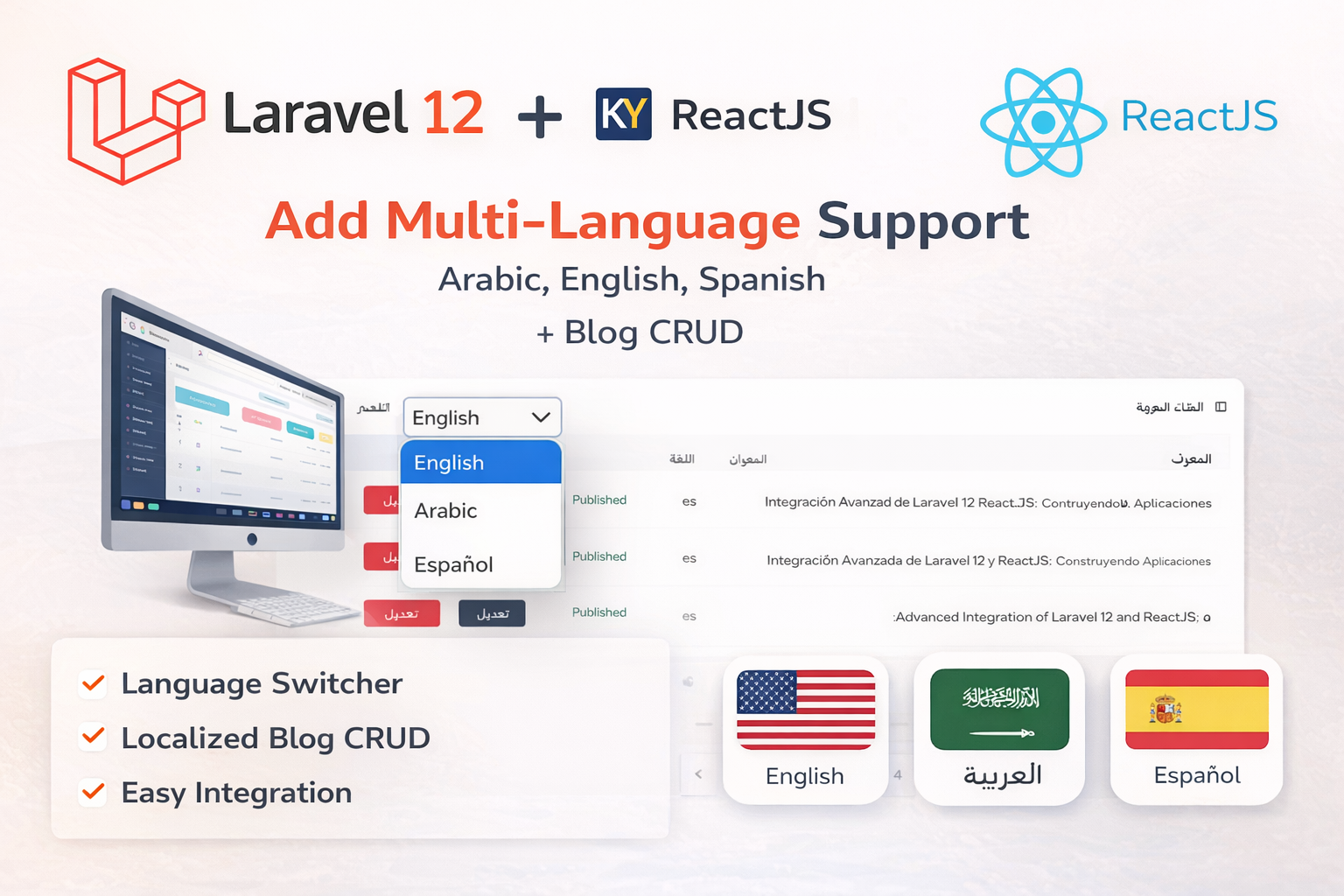
Laravel 12 + ReactJS Starter Kit: Add Multi-Language Support (Arabic, English, Spanish) with Blog CRUD
🚀 Installation & Setup Download & Extract Get the ZIP from kritimyantra.com and extract it. Includes preconfigu...
Understanding Laravel 12 Middleware
Welcome to this beginner-friendly guide on Laravel 12 middleware! If you're new to Laravel or web development, don’t worry—we’ll w...
Laravel 12 Advanced Interview Questions and Answers
Laravel 12, released in February 2025, focuses on maintenance, updated dependencies, and introduces new starter kits for React, Vu...
Understanding Facades in Laravel 12: How to Create Custom Facades
Imagine you're using a remote control to change the channel on your TV. You press a button, and the TV responds—without needing to...
Comments
No comments yet. Be the first to comment.
Sign in to join the discussion.