
Creating a Registration Page in Laravel 12: Complete Guide with Form Submission

User registration is a fundamental feature for most web applications. Laravel 12 provides an excellent authentication scaffolding system that we'll customize to create a secure, feature-rich registration page.
In this comprehensive guide, we'll cover:
- Setting up authentication scaffolding
- Customizing the registration form
- Validating user input
- Processing form submission
- Adding extra fields (name, phone, etc.)
- Email verification
- Best practices for security
1. Setting Up Authentication Scaffolding
1.1 Install Laravel Breeze (Recommended)
composer require laravel/breeze --dev
php artisan breeze:install
npm install && npm run dev
php artisan migrate
This generates:
- Registration views (
resources/views/auth/register.blade.php) - Authentication controllers (
app/Http/Controllers/Auth) - Routes (
routes/auth.php)
1.2 Verify Routes
Check routes/web.php now includes:
Auth::routes();
2. Customizing the Registration Form
2.1 Modify the Registration Blade View
Edit resources/views/auth/register.blade.php:
@extends('layouts.app')

@section('content')
<div class="container">
    <div class="row justify-content-center">
        <div class="col-md-8">
            <div class="card">
                <div class="card-header">{{ __('Register') }}</div>

                <div class="card-body">
                    <form method="POST" action="{{ route('register') }}">
                        @csrf

                        <!-- Name Field -->
                        <div class="row mb-3">
                            <label for="name" class="col-md-4 col-form-label text-md-end">
                                {{ __('Full Name') }}
                            </label>
                            <div class="col-md-6">
                                <input id="name" type="text"
                                    class="form-control @error('name') is-invalid @enderror"
                                    name="name" value="{{ old('name') }}"
                                    required autocomplete="name" autofocus>
                                @error('name')
                                    <span class="invalid-feedback" role="alert">
                                        <strong>{{ $message }}</strong>
                                    </span>
                                @enderror
                            </div>
                        </div>

                        <!-- Email Field -->
                        <div class="row mb-3">
                            <label for="email" class="col-md-4 col-form-label text-md-end">
                                {{ __('Email Address') }}
                            </label>
                            <div class="col-md-6">
                                <input id="email" type="email"
                                    class="form-control @error('email') is-invalid @enderror"
                                    name="email" value="{{ old('email') }}"
                                    required autocomplete="email">
                                @error('email')
                                    <span class="invalid-feedback" role="alert">
                                        <strong>{{ $message }}</strong>
                                    </span>
                                @enderror
                            </div>
                        </div>

                        <!-- Password Field -->
                        <div class="row mb-3">
                            <label for="password" class="col-md-4 col-form-label text-md-end">
                                {{ __('Password') }}
                            </label>
                            <div class="col-md-6">
                                <input id="password" type="password"
                                    class="form-control @error('password') is-invalid @enderror"
                                    name="password" required autocomplete="new-password">
                                @error('password')
                                    <span class="invalid-feedback" role="alert">
                                        <strong>{{ $message }}</strong>
                                    </span>
                                @enderror
                            </div>
                        </div>

                        <!-- Confirm Password -->
                        <div class="row mb-3">
                            <label for="password-confirm" class="col-md-4 col-form-label text-md-end">
                                {{ __('Confirm Password') }}
                            </label>
                            <div class="col-md-6">
                                <input id="password-confirm" type="password"
                                    class="form-control"
                                    name="password_confirmation" required autocomplete="new-password">
                            </div>
                        </div>

                        <!-- Submit Button -->
                        <div class="row mb-0">
                            <div class="col-md-6 offset-md-4">
                                <button type="submit" class="btn btn-primary">
                                    {{ __('Register') }}
                                </button>
                            </div>
                        </div>
                    </form>
                </div>
            </div>
        </div>
    </div>
</div>
@endsection
3. Adding Extra Fields to Registration
3.1 Add Phone Number Field
First, create a migration:
php artisan make:migration add_phone_to_users_table
public function up()
{
    Schema::table('users', function (Blueprint $table) {
        $table->string('phone')->after('email')->nullable();
    });
}
Run migration: php artisan migrate
3.2 Update Registration Form
Add to register.blade.php:
<!-- Phone Field -->
<div class="row mb-3">
    <label for="phone" class="col-md-4 col-form-label text-md-end">
        {{ __('Phone Number') }}
    </label>
    <div class="col-md-6">
        <input id="phone" type="tel"
            class="form-control @error('phone') is-invalid @enderror"
            name="phone" value="{{ old('phone') }}"
            autocomplete="tel">
        @error('phone')
            <span class="invalid-feedback" role="alert">
                <strong>{{ $message }}</strong>
            </span>
        @enderror
    </div>
</div>
3.3 Modify Registration Controller
Edit app/Http/Controllers/Auth/RegisterController.php:
protected function validator(array $data)
{
    return Validator::make($data, [
        'name' => ['required', 'string', 'max:255'],
        'email' => ['required', 'string', 'email', 'max:255', 'unique:users'],
        'phone' => ['nullable', 'string', 'max:20'],
        'password' => ['required', 'string', 'min:8', 'confirmed'],
    ]);
}

protected function create(array $data)
{
    return User::create([
        'name' => $data['name'],
        'email' => $data['email'],
        'phone' => $data['phone'],
        'password' => Hash::make($data['password']),
    ]);
}
4. Form Validation & Submission
4.1 Custom Validation Rules
Add to RegisterController.php:
use Illuminate\Validation\Rules\Password;

protected function validator(array $data)
{
    return Validator::make($data, [
        // ... other rules
        'password' => [
            'required',
            'confirmed',
            Password::min(8)
                ->mixedCase()
                ->numbers()
                ->symbols()
                ->uncompromised(),
        ],
        'phone' => ['nullable', 'regex:/^([0-9\s\-\+\(\)]*)$/', 'min:10'],
    ]);
}
4.2 Handling Form Submission
Laravel's built-in RegisterController handles:
- Validation
- User creation
- Automatic login
- Redirection (configure in
protected $redirectTo = '/dashboard';)
5. Email Verification
5.1 Enable Verification
- Update
Usermodel:
use Illuminate\Contracts\Auth\MustVerifyEmail;

class User extends Authenticatable implements MustVerifyEmail
- Add to
routes/web.php:
Auth::routes(['verify' => true]);
5.2 Protect Verified-Only Routes
Route::middleware(['auth', 'verified'])->group(function () {
    // Protected routes here
});
5.3 Customize Verification Email
php artisan vendor:publish --tag=laravel-mail
Edit resources/views/vendor/mail/html/verify-email.blade.php
6. Security Best Practices
- Rate Limiting: Prevent brute force attacks
// In RegisterController
protected function throttleKey(Request $request)
{
    return Str::lower($request->input('email')).'|'.$request->ip();
}
- Honeypot Field: Add to form to catch bots
<input type="text" name="honeypot" style="display:none">
Then validate:
$validator->addRules(['honeypot' => 'max:0']);
Password Hashing: Automatic with Laravel's
HashfacadeHTTPS: Ensure your form submits over HTTPS
7. Testing Registration Flow
7.1 Browser Test
// tests/Feature/RegistrationTest.php
public function test_registration_screen_can_be_rendered()
{
    $response = $this->get('/register');
    $response->assertStatus(200);
}

public function test_new_users_can_register()
{
    $response = $this->post('/register', [
        'name' => 'Test User',
        'email' => 'test@example.com',
        'password' => 'Password123!',
        'password_confirmation' => 'Password123!',
    ]);

    $this->assertAuthenticated();
    $response->assertRedirect('/home');
}
Run tests: php artisan test
Conclusion
You've now built a secure, feature-complete registration system in Laravel 12 with:
✅ Customizable registration form
✅ Additional fields (phone number)
✅ Strong password validation
✅ Email verification
✅ Security protections
✅ Automated testing
Next Steps:
- Add socialite login (Google, Facebook)
- Implement CAPTCHA verification
- Create admin approval system for new users
🚀 Your application now has professional-grade user registration!
📌 Need help with specific customizations? Ask in the comments!
Projects to explore next
Source-code projects from the KritiMyantra catalogue. Check each project's details before buying.
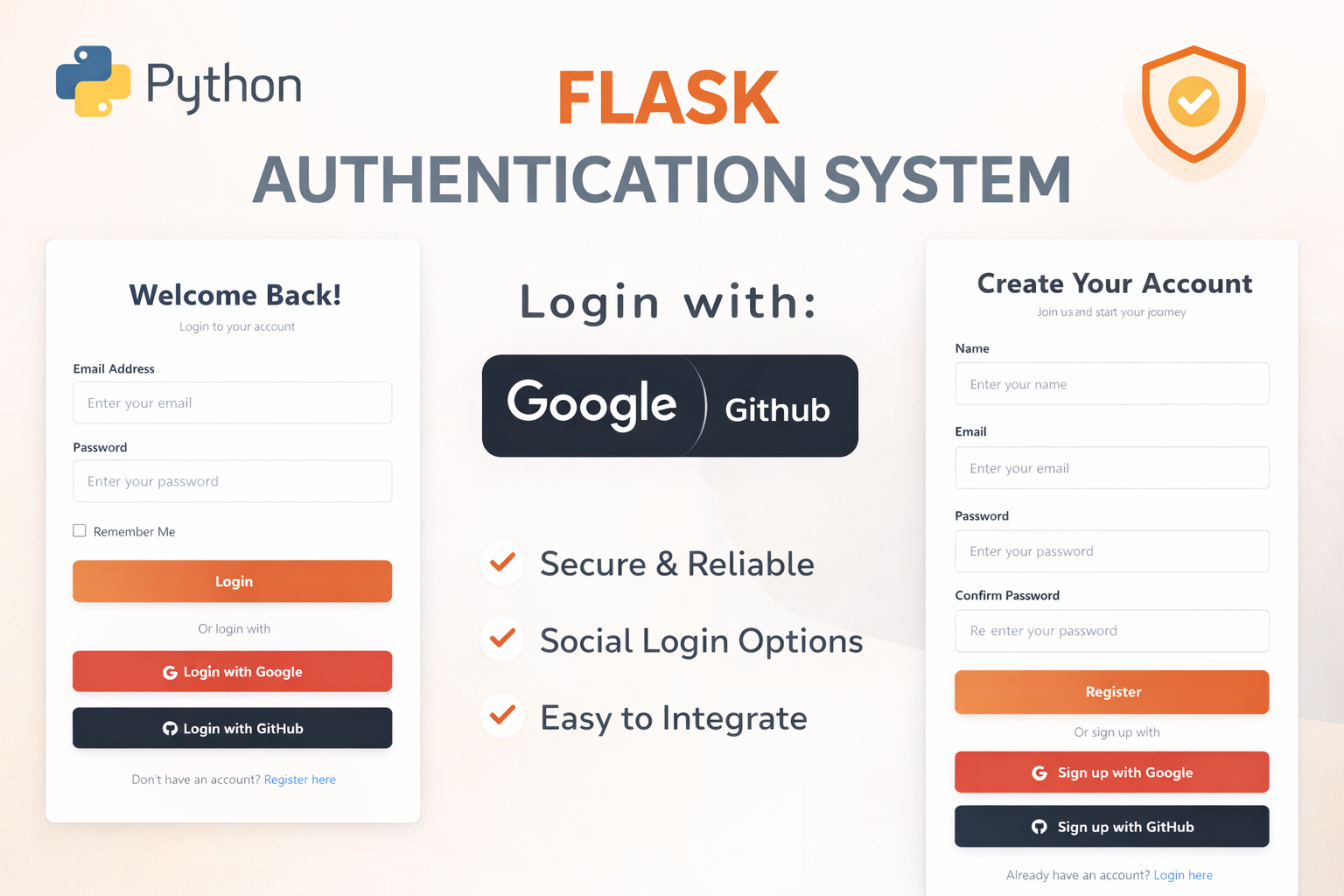
Flask Authentication System (Free Version) - Kritim Yantra
🛠 Features✔ Google & GitHub Authentication✔ User Registration & Login✔ Profile/Dashboard Access✔ Secure & Mi...

Flask Blog CMS with Admin Dashboard — Python Source Code
A Flask-based blogging website with a built-in admin dashboard. Manage articles, images, categories, tags and featured p...
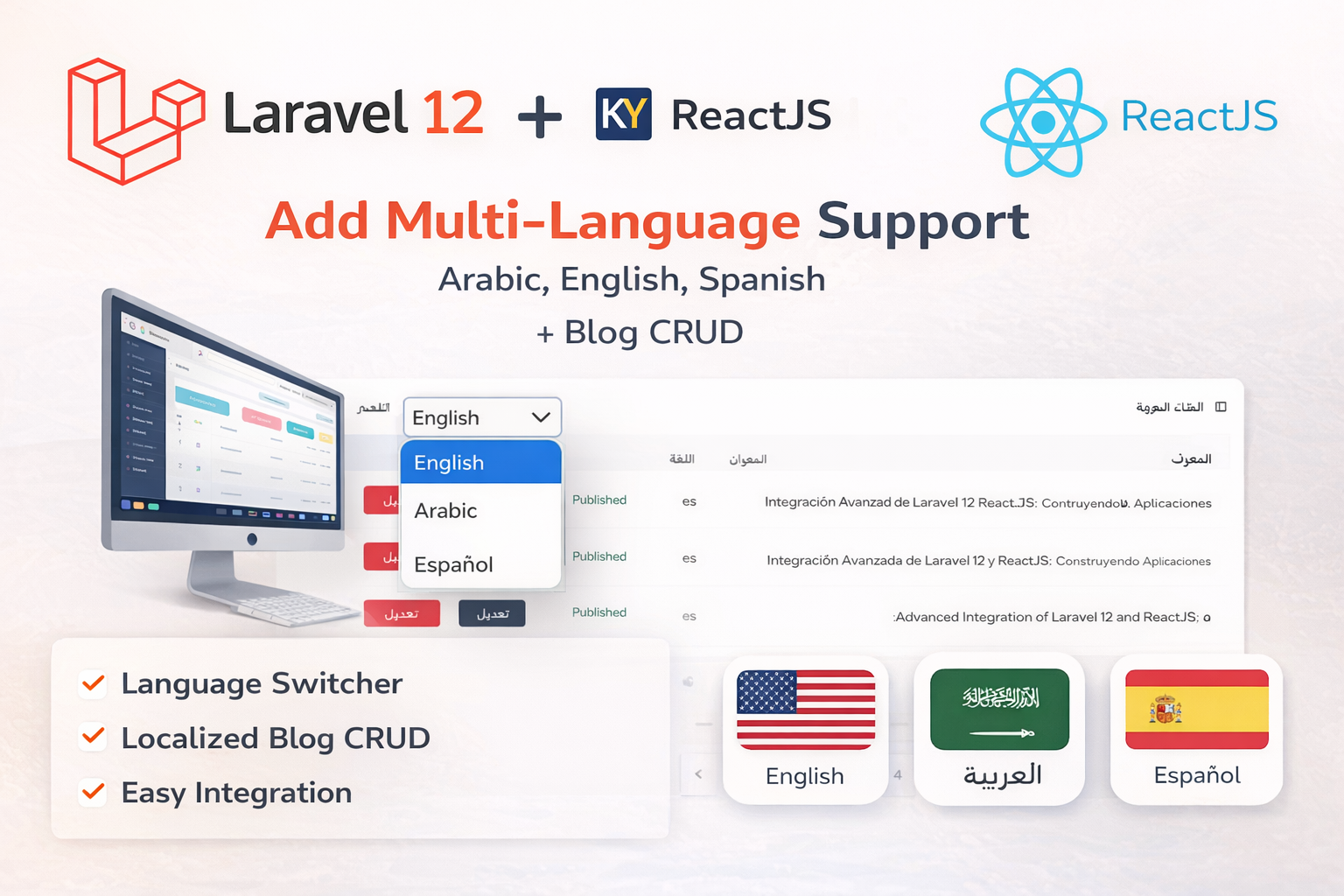
Laravel 12 + ReactJS Starter Kit: Add Multi-Language Support (Arabic, English, Spanish) with Blog CRUD
🚀 Installation & Setup Download & Extract Get the ZIP from kritimyantra.com and extract it. Includes preconfigu...

Laravel 12 Roles and Permissions Setup: Complete Guide
In many web applications, controlling user access based on roles and permissions is crucial. For example, an admin might need full...

Laravel 12 & AdminLTE Integration: Setup Your Stunning Admin Dashboard
AdminLTE is a popular, open-source admin dashboard template built with Bootstrap. It offers a sleek, responsive, and customizable...
Laravel 12 Blade Directives: From Beginner to Advanced
Laravel is one of the most popular PHP frameworks, and its templating engine, Blade, is a big reason why. Blade makes it easy to c...
Comments
No comments yet. Be the first to comment.
Sign in to join the discussion.